Last updated 2026-08-19
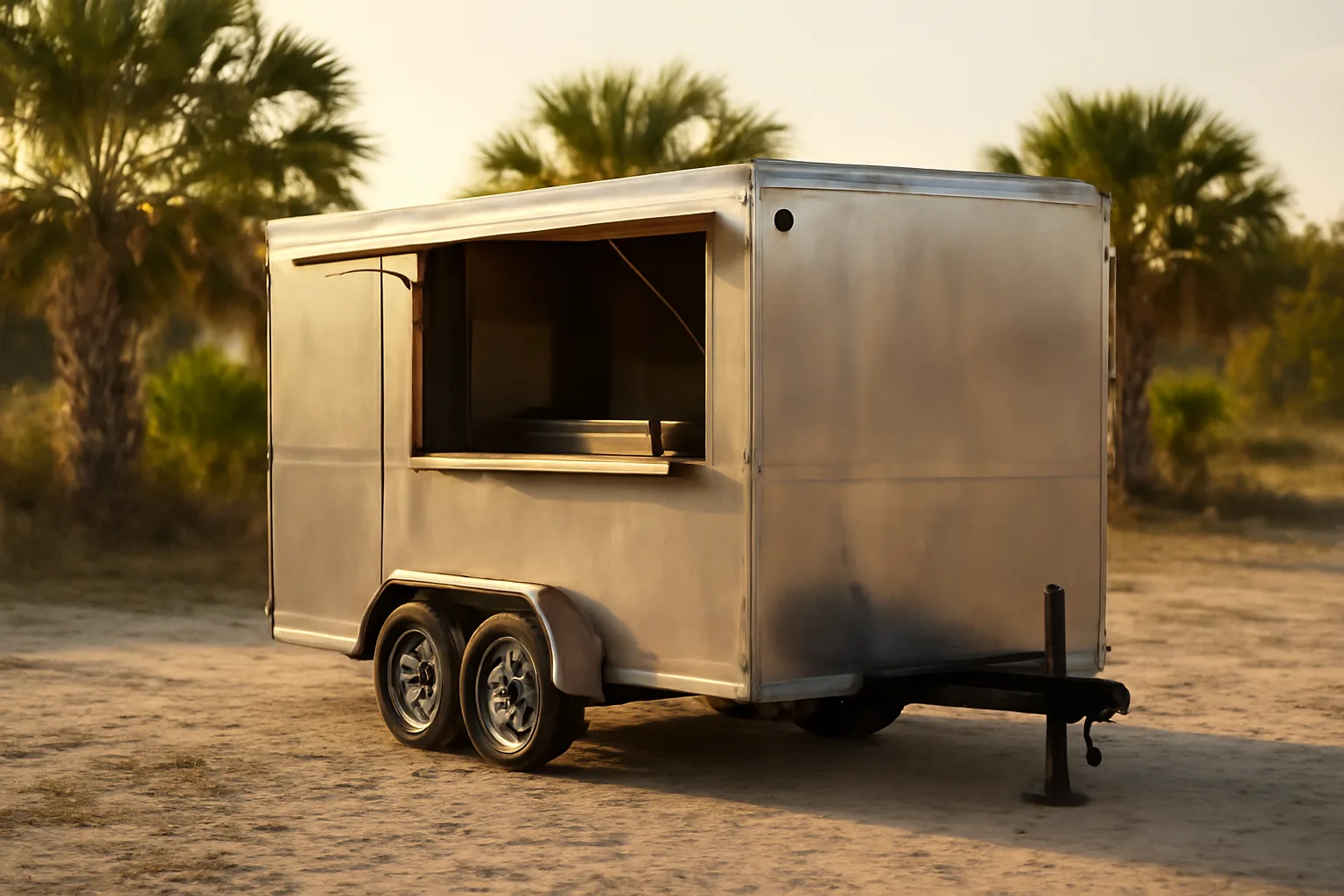
TL;DR
A concession trailer in Florida is a public food service establishment. That means a Division of Hotels and Restaurants license under chapter 509, plan review, a pre-opening inspection, sales tax registration, and a titled trailer. Cities generally cannot pile on a second food license for a mobile food dispensing vehicle. Fees and clock time change. Confirm both with DBPR and your fire official before you buy the unit.
Do you need a license for a concession trailer in Florida?
Yes. Cook, assemble, or serve food from a trailer for immediate consumption and Florida treats that unit as a public food service establishment. You need a license from the DBPR Division of Hotels and Restaurants. Running without it is a second degree misdemeanor under Florida Statute 509.241. [3]
The statute is blunt. "Each public lodging establishment and public food service establishment shall obtain a license from the division." [3] That license does not ride along when you sell the trailer. The same section says the license may not be transferred from one place or individual to another. Budget a fresh application when you buy a used unit.
A concession trailer in Florida usually sits in the mobile food dispensing vehicle bucket, not the 40-seat restaurant bucket. The hook is s. 509.013. A public food service establishment includes a vehicle where food is prepared, served, or sold for immediate consumption, called for or taken out by customers, or prepared prior to delivery. [2]
You still collect other paper. Sales and use tax registration with the Department of Revenue is one file. [8] A Florida title and tag for the trailer is another. You also need a certified food protection manager under s. 509.039 and employee food safety training records under s. 509.049. [5] [6] Fire still looks at any Type I hood and wet chemical system. Wheels do not erase those duties.
Skip the myth that a city occupational card replaces the state food license. It does not. Local business tax receipts can still show up under chapter 205. [12] They are not a substitute for the division license.
Who licenses concession trailers in Florida, DBPR or FDACS?
Hot food cooked on the trailer for the public goes to DBPR's Division of Hotels and Restaurants. Packaged manufacturing, some commissary processing, and most wholesale grocery-style activity sit with the Florida Department of Agriculture and Consumer Services under chapter 500. [11] Pick the wrong door and you redo the file.
DBPR is the default for a classic concession trailer. Burgers, tacos, funnel cake, coffee drinks built to order, smoked meats sold out the window. Plan review lives there too. [13]
FDACS shows up if you make product in a separate facility and only vend sealed packages, or if the commissary itself is a processed-food plant. A food permit under s. 500.12 is a different animal from a Hotels and Restaurants license. [11] Some operators hold both because the kitchen that supplies the trailer is a processor and the trailer is a public food service establishment. That is two statutes, not a mistake.
Temporary event licenses are still DBPR, just shorter. A weekend fair is not the same file as an annual mobile food dispensing vehicle. If you only work three fairs a year, ask the division which license type matches the calendar you actually have. Do not guess from a national blog.
| Path | Agency | Fits this use | Extra local food license |
|---|---|---|---|
| Annual mobile food dispensing vehicle | DBPR Division of Hotels and Restaurants | Cooked-to-order food from a trailer | Generally blocked by s. 509.102 |
| Temporary public food service | DBPR Division of Hotels and Restaurants | Short fairs and events | Event site rules still apply |
| Food permit | FDACS Division of Food Safety | Processing, packing, many wholesale foods | Chapter 500, not chapter 509 |
Expanding into Alabama later? The split between agriculture food and restaurant food looks similar on paper and different in the forms. The Alabama walkthrough is here: how to start a concession trailer in Alabama.
What does Florida Statute 509.102 actually change?
It stops cities and counties from stacking a second food license or food-license fee on a mobile food dispensing vehicle that already holds the state license. The statute says regulation of those licenses, registrations, permits, and fees is preempted to the state. [1]
Here is the line operators actually quote. "Regulation of mobile food dispensing vehicles involving licenses, registrations, permits, and fees is preempted to the state." [1] Read the current text on the legislature site before you argue with a clerk. The section has been amended. Public-property rules are not the same thing as a food license.
What 509.102 does not do is let you park on a city hall lawn. Private property still needs the owner's yes. Parks departments still run vendor programs. Homeowner associations still tow. Event promoters still charge space fees. Those are property and police-power issues, not a second DBPR card.
The definition in 509.102 tracks a vehicle that is a public food service establishment and is self-propelled or otherwise movable, with self-contained utilities such as gas, water, electricity, or liquid waste disposal. [1] A pushcart with a cooler and no utilities may not fit. Confirm the unit type with the division before you file.
Do not pick that fight on the roadside. Carry the state license and the latest inspection. Bring the commissary letter if you have one. Bring written lot permission. Follow up in writing if a city tries to sell you a food permit the statute already blocked.
How much does a concession trailer cost in Florida?
There is no official Florida sticker price for the trailer. Used concession trailers run from a few thousand dollars for a tired snow-cone box to well into six figures for a new custom kitchen. Nobody publishes a clean statewide average I trust. Price the unit in the market, then add the paper and the first-year burn.
The paper has some fixed numbers. Florida LLC articles of organization cost $125 to file with the Division of Corporations. [9] An EIN from the IRS is free if you apply on the IRS site. [10] Florida's general state sales tax rate is 6 percent, per the Florida Department of Revenue, and local surtax stacks on top. [8] DBPR license fees sit in s. 509.251 and in the division's current fee table. [4] I am not printing a license dollar figure here because that table moves. Pull it from the board the week you apply.
Fire suppression, a listed hood, propane plumbing, and a generator that can actually run the make table will dwarf the state license fee. That is where people blow the budget. A cheap trailer with a household range hood is no bargain. You will pay to rip it out.
First-year cash that is not the trailer includes commissary rent if you need one, propane, ice, spoilage, event deposits, commercial coverage, a spare water pump, and sales tax you must remit. Build a reserve. If the menu only works at $18 plates in a town that wants $8, the beautiful trailer will not save you.
Compare notes with other state cost writeups if you are buying a unit out of state and towing it in. The Alabama cost path is a useful contrast: Concession trailer cost in Alabama.
How long does a concession trailer take in Florida?
It takes as long as plan review, construction fixes, fire, and the opening inspection take. I will not quote a guaranteed week count. The division does not work on your closing date. Incomplete drawings stall people, not the existence of the form.
Sequence is the only honest clock. Form the entity and get the EIN. [9] [10] Register for sales tax. [8] Draw the trailer the way it will actually be built, including tanks, power, refrigeration, hood, and finish schedule. File plan review with Hotels and Restaurants. [13] Build or remediate only to the accepted plans. Call for the opening inspection after fire has signed the suppression. Then you can sell.
Used out-of-state trailers add time. Florida wants Florida plans and a Florida inspection. A certificate from Georgia is a nice story. It is not your license. People lose a season because they buy first and ask plan review second. Do the reverse.
Local fire is the wildcard. Some counties look at the hood quickly. Some want a full packet, a live dump test, and a return visit. Confirm that with the authority having jurisdiction where the unit will be inspected, not with a Facebook group.
A temporary event license for one fair is a shorter file. You still do not get to skip sanitation or fire. Read the temporary application the week of the event and the week before. Requirements get updated.
What business paper do you file before the food license?
File the entity first so the food license, tax account, and trailer title all match one name. Most people use a Florida LLC through Sunbiz. The articles filing fee is $125. [9] Confirm the current annual report fee on the same site. Use the legal name, or file a fictitious name if you will vend under a different banner.
Get a free EIN from the IRS if you are a multi-member LLC, have employees, or just want a clean bank account. [10] Do not pay a reseller for an EIN. That is a waste of money.
Register for sales and use tax with the Florida Department of Revenue before you take a dollar. [8] Prepared food sold from a concession trailer is generally taxable. Florida's general state sales tax rate is 6 percent. County discretionary surtax is extra. Confirm your combined rate in the DOR tables for the counties you will work.
A county or city business tax receipt can still appear under chapter 205 even after 509.102. [12] Ask the tax collector whether they treat a mobile food dispensing vehicle as subject, exempt, or already covered. Get the answer in writing. Do not confuse that receipt with the DBPR food license.
Employees change the file fast. Workers' compensation and new-hire reporting show up the moment you hire. Florida Chapter 440 is unforgiving when someone slices a finger on your line. Confirm coverage thresholds with your carrier and the Division of Workers' Compensation. Solo operators still need a plan for what happens if they cannot work.
What does DBPR plan review actually want?
Plan review wants to see the trailer as a public food service establishment before you cook for the public. The division's plan review page is the start point, not a Facebook template. [13] Submit what they ask, in the format they ask. Incomplete packets sit.
Expect floor plans, an equipment schedule, a finish schedule, plumbing for potable and waste tanks, power, refrigeration specs, and the menu. The menu drives the risk. Raw chicken and a fryer draw more questions than canned soda and pretzels. Sanitary standards sit in s. 509.221 and in chapter 61C of the Florida Administrative Code. [14]
Rule 61C-4.0161 is the mobile-specific rule. [7] That is where tank sizing, servicing, and commissary language live. Read the current rule text. Do not rely on a 2014 blog that paraphrased it. If your unit is not truly self-contained, plan on a commissary agreement that matches the rule, not a friend's restaurant that lets you rinse pans sometimes.
Pay a plans examiner or a kitchen designer who has passed Florida mobile review before, not a residential draftsman. One rejected set costs more than a person who already knows the tank notes. ConcessionPath sells a $149 one-time Health + Fire-Suppression Kit if you want the health and hood paper in one folder before you talk to plan review. A homemade checklist works if you actually finish it.
Do not remodel while the packet is in review and then surprise the inspector. What they accepted is what they inspect.
Do you still need a commissary and a fire inspection in Florida?
Often yes to both. Self-contained utilities are part of the 509.102 definition, and 61C-4.0161 still governs how mobile units get water, dump waste, and service equipment. [1] [7] If the trailer cannot honestly stand alone, you need a commissary that will put it in writing.
A commissary is not your home kitchen. Home kitchens fail this test constantly. Residential well water, a garage sink, and a backyard grease can will not get past an inspector who is awake. Rent space from a licensed facility or build a unit the division accepts as self-sufficient. Confirm which path you are on in the plan review notes.
Fire is separate from food. A Type I hood and a wet chemical system are normal once you produce grease-laden vapor. The Florida Fire Prevention Code is the statewide baseline under s. 633.202. [15] The local fire official still gets a say on the install, the fusible links, the K-class extinguisher, and whether your propane bottles are mounted like a death wish.
Skip the cheap household hood fan. That is a waste of money. Buy listed equipment and a suppression cylinder a Florida technician will certify. Keep the last service tag on the tank where the inspector can see it.
Holding only low-risk food with no cooking and no grease? Say so in the plans and be ready to live inside that menu. The first time you add wings, you just changed the fire file.
How do sales tax, parking, and events actually work?
Sales tax is state. You register with DOR, charge the combined state and local rate, and file on the schedule they assign. [8] Florida's general state sales tax rate is 6 percent. Food sold for immediate consumption from a trailer is not a grocery exemption play. If a customer eats it out of a boat of foil, budget to tax it unless DOR has a written exception that fits your item.
Parking is local and private. 509.102 blocks a second food license. It does not invent a right to a downtown curb. [1] Get written permission for lots. Read park vendor rules. Expect towing in HOA lots and mall fire lanes. I would rather pay a lot owner than argue with a wrecker.
Events are contracts. The promoter wants proof of insurance and the state license. Some also want a temporary fire look. Deposit fees are real. No-shows still charge you. Read the rain clause.
Multi-county work does not mean a new DBPR food license for each county. That is the point of the state license. [1] You may still see different surtax rates, different lot rules, and different event insurance limits. Keep a folder per county for rates and site rules, not a stack of food licenses.
Testing a west-coast market later? The California license stack is heavier and more local. Start here if you are comparing: concession trailer license in California.
What insurance and vehicle papers do you need?
You need a titled Florida trailer and insurance that matches how you actually tow and sell. Title and registration run through FLHSMV. The food license is not a substitute tag. If the unit came from out of state, budget time for the title problem before you wrap it.
Insurance is not one policy. Commercial auto is the start. Add general liability. Product liability belongs on the same conversation once you serve food. Employees mean workers' compensation. Park in a brewery lot and they will name themselves as additional insured and want high limits. Confirm current numbers with the venue, not a national template.
Do not cheap out on liability to save a hundred dollars a month. One scald claim ends the year. I also would not buy a fancy cyber package in year one. That is a waste of money for a three-item lunch trailer.
Propane and generator setups need to match the policy. Tell the carrier you carry bottles and a gas fryer. Lie about it and you do not have coverage.
Keep the declaration page in the trailer with the DBPR license and the last inspection. Inspectors and lot managers ask. Fumbling through email at the gate makes you look unready.
Arizona and Colorado operators ask the same insurance questions with different state food paper. If you are comparing those files, see how to start a concession trailer in Arizona and how to start a concession trailer in Colorado.
What first-year mistakes burn money in Florida?
Buying the trailer before plan review. That is the expensive one. You inherit someone else's illegal plumbing and then you pay twice.
Treating 509.102 as a parking pass. You will get towed and you will still owe the event booth fee.
Skipping the certified food protection manager. s. 509.039 is not decorative. [5] Same for employee training under s. 509.049. [6] Inspectors ask for the card and the roster.
Running raw chicken on a two-well trailer with no real refrigeration recovery. The make table dies at 2 p.m. on a hot lot and you dump product. Buy cold storage that works at idle in 95 degree air, or change the menu.
Hiring a national service that claims it licenses you in every state. Florida wants Florida forms. Keep the money and read the division pages.
Underpricing to get the name out. Propane, ice, and event fees do not care about your brand story. If the numbers only work at festivals with a heavy booth fee, do not sign a Tuesday office-park lunch plan.
Ignoring sales tax filing until the third quarter. DOR will find you. File on time even when the month was bad. [8]
What should you confirm with the board before you buy a trailer?
Confirm four things in writing. The license type that matches your menu and calendar. The current fee from the division table authorized by s. 509.251. [4] Whether your drawings need plan review as a new mobile unit or as a remodel. Whether your fire official will look at the hood before or with the food inspector. [13] [15]
Ask DBPR how they want the owner name to match Sunbiz and the title. Mismatched names slow files. Ask whether your unit counts as self-sufficient under the current 61C-4.0161 text. [7] Ask DOR which filing frequency you will land on. [8]
Email the plans examiner a one-page equipment list before you wire a builder. If they flinch at the residential refrigerator, you just saved the deposit.
Other states will not save you from this homework. The Arkansas and Alaska paths are useful only as a reminder that every state invents its own nouns. See how to start a concession trailer in Arkansas and how to start a concession trailer in Alaska if you are towing across lines.
ConcessionPath keeps the Florida paper path at /start. We are an independent publisher, not a law firm and not a service company. The board has the last word on fees, quotas, and timing. Confirm those the week you file.
Frequently asked questions
Do you need a license for concession trailer in Florida?
Yes. A concession trailer that prepares or serves food for immediate consumption is a public food service establishment. You need a DBPR Division of Hotels and Restaurants license under chapter 509. Operating without it is a second degree misdemeanor under s. 509.241. Local business tax is a separate question and does not replace that license.
How much does concession trailer cost in Florida?
The trailer itself has no official state price. Used boxes start in the low thousands. New custom kitchens run into six figures. Fixed paper you can confirm: Florida LLC articles are $125 on Sunbiz, an IRS EIN is free, and state sales tax is 6 percent plus local surtax. Confirm the current DBPR license fee on the division table the week you apply.
How long does concession trailer take in Florida?
There is no honest guaranteed week count. Time follows plan review, any rebuild to match accepted drawings, fire sign-off on the hood, and the opening food inspection. Used out-of-state units take longer because Florida wants Florida plans. Confirm current review load with the division. Do not buy a trailer against a promised open date.
What is a mobile food dispensing vehicle in Florida?
Under s. 509.102 it is a public food service establishment that is self-propelled or otherwise movable and includes self-contained utilities such as gas, water, electricity, or liquid waste disposal. Most concession trailers try to fit that definition. A cooler on wheels may not. Confirm the unit type with DBPR before you file.
Can a city still require a food truck permit after 509.102?
A municipality or county generally cannot require a separate food license or food-license fee for a mobile food dispensing vehicle that already holds the state license. That preemption is in s. 509.102. Cities can still control public property, parks, and parking. Private lots still need the owner's permission. Read the current statute text before you argue.
Do you need ServSafe or a food manager card in Florida?
You need a certified food protection manager that meets s. 509.039 and the division's accepted exams. ServSafe is one common route, not the only legal name. You also need employee food safety training records under s. 509.049. Keep the manager certificate in the trailer. Inspectors ask for it.
Do you need a commissary for a Florida concession trailer?
If the unit is not truly self-sufficient under the current 61C-4.0161 text, yes. You need a written commissary arrangement that matches the rule, not a home sink. Self-contained water, waste, and servicing have to match the approved plans. Ask plan review which path they are putting you on before you sign a commissary lease.
Can you run the trailer from a home kitchen in Florida?
Not as your commissary or prep site if you are a public food service establishment. Home kitchens fail this inspection constantly. Cottage food under chapter 500 is a different, limited path and does not cover a hot concession trailer. Use a licensed commissary or a unit the division accepts as self-sufficient.
Do you need a new license in every Florida county?
No. The Hotels and Restaurants mobile license is a state license. s. 509.102 is why cities and counties generally cannot stack another food license. You may still face different sales surtax rates, lot rules, park vendor programs, and event insurance limits. Keep site rules per county, not a pile of food licenses.
Is food from a concession trailer taxable in Florida?
Usually yes. Prepared food sold for immediate consumption is generally taxable. Florida's general state sales tax rate is 6 percent, and local discretionary surtax adds on. Register with the Department of Revenue before the first sale and file on the schedule they assign. Confirm your combined rate in the DOR tables.
Can you buy a used trailer and open the same week?
Almost never, if the unit needs Florida plan review or any hood work. s. 509.241 also says the existing license does not transfer with the trailer or to a new owner. You file again. A clean, already Florida-approved unit still needs the new owner's license and inspection. Confirm that sequence with the division before you wire the seller.
Do you need workers compensation for a concession trailer in Florida?
If you have employees, treat Chapter 440 as in play and confirm coverage with your carrier and the Division of Workers' Compensation. Solo owners still need a plan for injury downtime. Venues will also ask for general liability. Do not guess from a blog. Ask the carrier using your real headcount and menu.
Should you get a temporary event license or an annual mobile license?
If you only work a handful of fairs, ask DBPR whether a temporary public food service license matches that calendar. If you will vend week after week from the same trailer, the annual mobile food dispensing vehicle license is the usual file. Temporary is not a shortcut around sanitation or fire. Read the current application for the license type you actually need.
Does FDACS license food trucks in Florida?
Not the typical hot concession trailer. FDACS food permits under s. 500.12 cover processing, packing, and many wholesale foods. Cooked-to-order food from a trailer is a DBPR Hotels and Restaurants public food service license. Some operators hold both because the commissary is a processor and the trailer is a food service establishment.
Sources
- Florida Statute 509.102, Mobile food dispensing vehicles: State preemption of local licenses, registrations, permits, and fees for mobile food dispensing vehicles, plus the statutory definition of an MFDV
- Florida Statute 509.013, Definitions: Public food service establishment includes a vehicle where food is prepared, served, or sold for immediate consumption or takeout
- Florida Statute 509.241, Licenses required: Every public food service establishment must obtain a division license; operating without one is a second degree misdemeanor; licenses are not transferable
- Florida Statute 509.251, License fees: The division is authorized to set and collect public food service license fees
- Florida Statute 509.039, Food service manager certification: Division must adopt food safety training and certification standards for food service managers in chapter 509 establishments
- Florida Statute 509.049, Food service employee training: Public food service establishments must provide approved food safety training for employees
- Florida Administrative Code 61C-4.0161, Mobile Food Dispensing Vehicles: Mobile-specific sanitation, servicing, tank, and commissary rules for mobile food dispensing vehicles
- Florida Department of Revenue, Sales and Use Tax page: Florida's general state sales tax rate is 6 percent, with local discretionary surtax added by county
- Florida Division of Corporations, Start a Florida LLC: Florida LLC articles of organization filing fee is $125
- IRS, Apply for an Employer Identification Number (EIN) online: Businesses can obtain an EIN online from the IRS at no cost
- Florida Statute 500.12, Food permits: FDACS food permits apply to food establishments under chapter 500, a separate path from DBPR chapter 509 licenses
- Florida Statute 205.032, County business tax: Counties may levy a local business tax, which is separate from the state food license
- DBPR Division of Hotels and Restaurants, Plan Review: Public food service establishments submit plans to the division for review before construction or conversion
- Florida Statute 509.221, Sanitary regulations: Public food service establishments must meet statutory sanitary standards enforced by the division
- Florida Statute 633.202, Florida Fire Prevention Code: Florida adopts a statewide Fire Prevention Code that local fire officials use for hood and suppression reviews