Last updated 2026-08-17
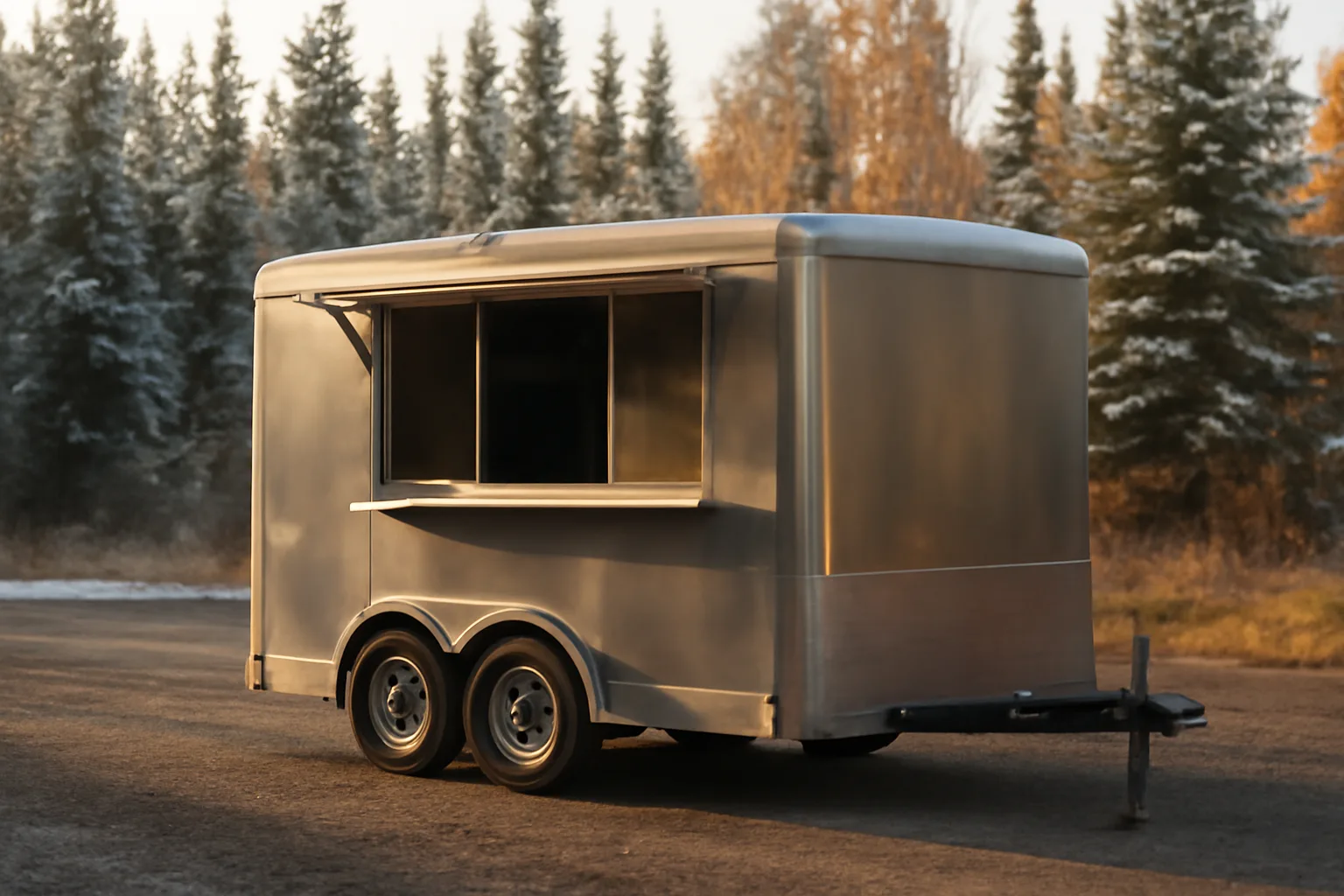
TL;DR
Yes, you need several licenses to run a concession trailer in Alaska. At minimum: a state food establishment permit from the Alaska Division of Environmental Health, a municipal business license, a $50 state business license, and a federal EIN. Budget $350 to $700 in combined first-year fees, plus a food handler card per employee. Plan 4 to 12 weeks for inspections and approvals depending on your borough.
Do you need a license to operate a concession trailer in Alaska?
Yes. Running any mobile food unit in Alaska without a valid food establishment permit breaks Alaska Statute 17.20, the law covering food, drugs, and cosmetics, and the rules under 18 AAC 31, the Alaska Food Code. [1] The Division of Environmental Health (DEH) inside the Alaska Department of Environmental Conservation (DEC) issues those permits.
There is no single "concession trailer license." You are stacking at least three approvals: a state food establishment permit, a municipal or borough business license, and in most places a fire inspection clearance for any cooking equipment with an open flame or fryer. Some event venues and state parks tack on a separate vendor permit before you can set up.
One piece of good news. Alaska does not make food vendors carry a special state license on top of everything else. The general Alaska Business License under AS 43.70 costs $50 and covers your right to do business in the state. [2] That is separate from, and on top of, the food permit.
What state agency handles Alaska mobile food permits?
The Alaska Department of Environmental Conservation, Division of Environmental Health, is the gatekeeper. Its Food Safety and Sanitation Program issues the "food establishment permit" that applies to mobile food units, concession trailers included. [1]
Alaska sorts mobile units by risk tier. A unit selling only pre-packaged items (candy bars, bottled drinks) sits low. A trailer doing raw meat, full cooking, or temperature-sensitive foods like dairy is a higher-risk establishment and draws more scrutiny during plan review and inspection.
DEC defines what counts as a "food establishment" subject to permitting under 18 AAC 31.020. [3] Your application goes to the DEC district office covering the area where you plan to work most. There are offices in Anchorage, Fairbanks, Juneau, and a few smaller regions, so vending across multiple areas can mean coordinating with more than one office.
One honest note. DEC's speed swings hard by season. Applications filed in late winter (January through March) for a summer season move faster than ones filed in April or May, when the queue jams with everyone racing to open before tourist season.
How much does a concession trailer license cost in Alaska?
There is no single clean number. The fee depends on permit tier, municipality, and whether you need plan review. Here is an honest breakdown of what you can expect to pay.
| Fee Item | Typical Range | Issuing Authority |
|---|---|---|
| State food establishment permit | $100, $350/year | Alaska DEC |
| State business license | $50/2 years | Alaska Dept. of Commerce [2] |
| Municipality business license | $50, $200/year | City/Borough |
| Plan review fee (new builds) | $50, $200 one-time | Alaska DEC |
| Fire inspection / suppression cert | $0, $150 | Local fire marshal |
| Food handler card (per person) | $10, $25 per card | Approved trainer |
| State-park or event vendor permit | $25, $500+ per event | Land manager |
A realistic first-year licensing bill for a typical cooking trailer in Anchorage runs $350 to $700 before you hit the annual renewal cycle. DEC does not post its mobile-unit permit fee in a simple online schedule; it sets fees by rule and they change, so confirm the current amount with your district office before you write the check. [1]
The $50 state business license fee covers a two-year period, not one year, and it is set in AS 43.70.031. [2] That is one of the cheaper line items here.
Food handler certification runs about $10 to $25 per person through an accredited program. Alaska wants at least one card holder on-site during operating hours under 18 AAC 31.030. [3]
How long does getting licensed in Alaska take?
Four to twelve weeks is the honest window for a first-timer. Here is where that range comes from.
If your trailer is already built and substantially meets 18 AAC 31 construction standards (three-compartment sink, hand-wash station, ventilation, potable water tank, wastewater tank), DEC can sometimes inspect within two to four weeks. If the trailer is new or heavily modified and needs a formal plan review, add another two to four weeks for DEC to read the plans before they even schedule the inspection.
Municipal business licenses in Anchorage and Fairbanks clear in about one to two weeks with complete paperwork. Smaller boroughs vary with staff capacity.
Fire marshal inspections in Anchorage run through the Anchorage Fire Department and usually schedule within one to three weeks of your request. If your suppression certificate is already current (issued within the last 12 months), you may skip the fire inspection entirely and just hand over the documentation.
The wildcard is the busy-season crunch. DEC inspectors cover enormous ground. Open a trailer in the Mat-Su Valley or on the Kenai Peninsula and your district inspector may be juggling dozens of applications in May. File everything in February or March if you want a June opening.
What does Alaska's food code actually require for a concession trailer?
The Alaska Food Code at 18 AAC 31 tells you exactly how the trailer must be built and run. [3] The core physical requirements for a mobile unit doing hot food:
A three-compartment sink for wash, rinse, and sanitize. A separate hand-washing sink used for nothing else. Potable water storage sized to your service volume (DEC typically wants 40 to 60 gallons for active cooking, though confirm the current threshold with your district office). A wastewater tank at least 15 percent bigger than the potable tank. Mechanical ventilation over cooking equipment. A probe thermometer for food temps.
The code also requires a written food safety plan for certain higher-risk operations. Serving raw proteins or temperature control for safety (TCS) foods means you should be ready to document your cooking, cooling, and holding steps.
One thing Alaska is picky about that surprises lower-48 operators: water source documentation. Filling from a municipal tap is easy. At a remote event or fair using a non-municipal source, you have to verify the source is approved and show that paperwork on request.
For the startup steps beyond licensing, the how to start a concession trailer in Alaska guide covers equipment, commissary options, and site logistics for the state.
Do you need a commissary agreement in Alaska?
Probably, depending on your setup. Alaska DEC has no blanket rule forcing every mobile unit to use a commissary, but inspectors often want you to name a licensed food establishment where you prep, store, and clean if your trailer cannot handle those tasks on its own. [1]
A trailer with its own three-compartment sink, full hot and cold water, refrigeration, and real prep space stands a better chance of approval as a self-contained unit. A smaller trailer or one with limited water capacity may need a commissary agreement as a permit condition.
Commercial kitchen rentals in Anchorage run roughly $15 to $30 per hour. Fairbanks and Juneau land in a similar range. A few facilities offer monthly flat-rate agreements for mobile vendors. If you go this route, DEC needs the commissary to be a licensed food establishment. A friend's restaurant kitchen that is not independently licensed will not clear the bar.
What local and municipal licenses do you need in Anchorage, Fairbanks, or Juneau?
Alaska hands a lot of land-use and vending control to its municipalities, and the three biggest cities each run their own rules.
Anchorage requires a municipality business license and, if you operate on municipal property or in certain commercial zones, a separate mobile food vendor permit. Anchorage Municipal Code Chapter 10.95 governs solicitors and vendors in public spaces. Confirm current fees with the Anchorage Business License Office directly, since fees have shifted in recent years.
Fairbanks North Star Borough requires a borough business license. The City of Fairbanks may also require a separate city license inside city limits. Check with both if your location sits near the line.
Juneau requires a City and Borough of Juneau (CBJ) business license. Juneau is a cruise-ship market, so high-traffic waterfront spots may need extra permits from CBJ's Community Development Department. Competition for those spots is fierce.
Outside the big three, call your borough. The Kenai Peninsula Borough, Matanuska-Susitna Borough, and others each set their own local rules. Do not assume a state DEC permit alone lets you vend anywhere in the state.
What fire suppression and safety requirements apply to Alaska concession trailers?
Any trailer with deep fryers, open-flame equipment, or a commercial griddle needs an ANSUL-type automatic fire suppression system installed and certified by a licensed fire protection contractor. This is not an Alaska quirk. It follows from NFPA 96, the Standard for Ventilation Control and Fire Protection of Commercial Cooking Operations, which fire marshals in Anchorage and Fairbanks enforce. [4]
The suppression system has to be inspected and tagged by a licensed contractor every six months. That inspection certificate is what you carry to the fire marshal or drop into your DEC application packet. No cert, no permit, in most jurisdictions.
New to suppression paperwork and want one packet that bundles the health permit requirements with the fire suppression documentation? ConcessionPath sells a Health + Fire-Suppression Kit for $149 one-time at /start. Not required, but it cuts the research step down hard.
For propane-fueled equipment, Alaska also expects vehicle propane systems to meet NFPA 58, the Liquefied Petroleum Gas Code. [5] Your propane supplier can usually point you to a certified installer who knows what inspectors look for.
Do you need a food handler card in Alaska?
Yes. Alaska requires food service employees to hold a food handler permit (sometimes called a food worker card) before handling unpackaged food. The rule sits in 18 AAC 31.030. [3] You get the card by finishing an accredited food safety course, about two to four hours, roughly $10 to $25 depending on the provider.
Some operators also earn a ServSafe Food Manager certification. State law does not require it, but it is worth having for any operator doing complex cooking. It reads well during inspections and gives you a defensible record of food safety training if something ever goes wrong.
Food handler cards issued in Alaska are generally valid for three years. Hire seasonal staff and you should check their cards are current before opening day. DEC inspectors look for them during routine visits.
Training providers must be accredited under a program recognized by the Conference for Food Protection (CFP). The American National Standards Institute (ANSI) publishes the list of recognized programs. [6]
What does it cost to buy a concession trailer in Alaska?
The trailer is the big variable. A used, basic concession trailer (12 to 16 feet, minimal equipment) sells for $8,000 to $25,000 in Alaska depending on age and condition. A new custom build with full cooking equipment, a three-compartment sink, and proper ventilation runs $30,000 to $80,000 or more depending on size and spec. [7]
Alaska adds a cost most lower-48 guides ignore: getting the trailer here. Buy a unit in the continental US and ship it through a carrier like Alaska Marine Lines or Lynden Transport, and you add $1,500 to $4,000 in freight depending on trailer size and origin. [8] Driving one up the Alaska-Canada (ALCAN) Highway works but piles on mileage wear and fuel.
After the trailer, first-year operating costs beyond licensing include commissary access, liability insurance (typically $1,200 to $2,500 a year for a mobile food unit), propane or generator fuel, and food product. Alaska's remoteness pushes food costs 20 to 30 percent above national averages in many categories, so build that into your pricing before you commit.
To see how other states handle startup cost and licensing, the concession trailer license in Arizona and concession trailer license in California guides show how Alaska's fees compare to high-volume lower-48 markets.
What is the step-by-step license application process in Alaska?
Here is the sequence most first-time operators follow.
Step 1: Get your EIN. A federal Employer Identification Number from the IRS. Free, instant, online. You need it for everything else. [9]
Step 2: Register your business entity. Operating as an LLC or corporation? File with the Alaska Division of Corporations, Business and Professional Licensing. LLC formation costs $250 for the state filing fee. [10]
Step 3: Get the state business license. File with the Alaska Department of Commerce, Community, and Economic Development. The license costs $50 for a two-year period. [2]
Step 4: Submit your DEC food establishment permit application. Download the mobile food unit application from Alaska DEC, attach your equipment list, menu, and (if needed) plan drawings. Pay the plan review and permit fees. Contact your district office to confirm current amounts.
Step 5: Pass your DEC inspection. An inspector checks physical construction against 18 AAC 31. [3] Fix any deficiencies, then request a re-inspection.
Step 6: Get your fire suppression system certified. Hire a licensed contractor, get the tag, keep the paperwork.
Step 7: Get your municipal business license and any local vendor permits. This runs parallel to steps 4 through 6. Do not wait.
Step 8: Get food handler cards for yourself and any employees before you open.
Step 9: Secure a commissary agreement if required.
Step 10: Open.
Do steps 1 through 3 in your first week. Start step 4 the same week. Steps 5 through 9 can overlap. The bottleneck is almost always DEC inspection scheduling, so get that application in early.
For the full operational picture beyond licensing, the how to start a concession trailer in Alaska guide walks through location strategy, event permit sourcing, and seasonal planning for the state.
How does Alaska's licensing compare to neighboring and comparable states?
Alaska's framework is moderately demanding compared to the lower 48, not the most complex. Here is a rough comparison using states in our guide series.
| State | State Food Permit Cost (est.) | State Business License | Commissary Required by Rule | Notes |
|---|---|---|---|---|
| Alaska | $100, $350/year | $50/2 years | Case-by-case | Remote logistics add cost |
| Arizona | $300, $500/year | $12/year | Yes, for most units | County health departments |
| California | $500, $1,000+/year | $0 state, local varies | Yes, statewide | Highest fee environment |
| Arkansas | $50, $100/year | $50/year | No statewide rule | Lower regulation overall |
| Colorado | $200, $400/year | $10/year | Yes, for full-service | County-level enforcement |
Alaska sits mid-range on fees but carries unique logistical costs (freight, higher food input costs, seasonal windows) that push the effective first-year cost above comparable states. The state food permit is not as steep as California's, but the operating environment is genuinely harder.
See the concession trailer license in Arkansas and concession trailer license in Colorado guides for side-by-side detail.
Frequently asked questions
Do you need a license for a concession trailer in Alaska?
Yes. You need a state food establishment permit from the Alaska Department of Environmental Conservation, a state business license from the Alaska Department of Commerce, and a municipal business license from your city or borough. Most cooking trailers also need a fire suppression system certificate. There is no single combined license; you are stacking multiple approvals from different agencies.
How much does a concession trailer license cost in Alaska?
Expect $350 to $700 in first-year licensing fees for a typical cooking trailer in a major Alaska city. That includes roughly $100 to $350 for the DEC food establishment permit, $50 for the state business license (covers two years), $50 to $200 for a municipal license, and smaller amounts for food handler cards and a fire inspection. Confirm current DEC permit fees with your district office before applying.
How long does it take to get a concession trailer license in Alaska?
Four to twelve weeks for a first-time applicant. The DEC food establishment permit, including plan review and physical inspection, is the slowest step. Municipal licenses usually process in one to two weeks. Apply in late winter for a summer opening and you have a much better chance of hitting the short end. Applying in April or May for a June opening is a real risk.
Which agency issues the Alaska food establishment permit for mobile units?
The Alaska Department of Environmental Conservation, Division of Environmental Health, Food Safety and Sanitation Program. They have district offices in Anchorage, Fairbanks, Juneau, and several smaller regions. You apply to the office covering your primary operating area. The permit is required under Alaska Statute 17.20 and the rules in 18 AAC 31.
Does Alaska require a commissary for concession trailers?
Not by a blanket statewide rule, but DEC inspectors often require a commissary agreement if your trailer cannot independently handle all prep, storage, hot water, and cleaning. A fully self-contained trailer with its own three-compartment sink and adequate water capacity has the best shot at approval without one. If you do need a commissary, it must itself be a licensed food establishment.
What food handler certification does Alaska require?
Alaska requires at least one food handler permit holder on-site during operating hours under 18 AAC 31.030. Cards come from an accredited food safety course (2 to 4 hours, $10 to $25) and are valid for three years. Some operators also get a ServSafe Food Manager certification, which Alaska law does not require but is worth having as a documentation layer and reads well during inspections.
Do concession trailers in Alaska need a fire suppression system?
Yes, if you have deep fryers, open-flame burners, or commercial griddles. NFPA 96 governs commercial cooking ventilation and fire protection, and fire marshals in Anchorage and Fairbanks enforce it. The system must be installed by a licensed contractor and inspected every six months. You need a current inspection certificate to get your food establishment permit in most jurisdictions.
How much does a concession trailer cost to buy in Alaska?
A used basic trailer runs $8,000 to $25,000. A new custom build with full cooking equipment, sinks, and ventilation costs $30,000 to $80,000 or more. Add $1,500 to $4,000 if you ship the trailer from the continental US by marine or truck freight. Alaska's remoteness also pushes food input costs 20 to 30 percent above national averages, which affects your pricing from day one.
Do I need a separate vendor permit for state fairs or events in Alaska?
Yes. Most events and state parks issue separate vendor or special-use permits on top of your DEC food permit and business license. The Alaska State Fair in Palmer, for example, requires a vendor application and charges a booth fee. State park events go through the Alaska Division of Parks and Outdoor Recreation. Budget $25 to $500 or more per event depending on size and organizer.
Can I operate a concession trailer anywhere in Alaska with a state DEC permit?
No. The state DEC permit proves your trailer meets food safety standards, but it does not grant the right to set up anywhere. You still need the municipal business license and any local vendor permits for each jurisdiction. Some municipalities also restrict where mobile food units can operate through zoning. Always check with the city or borough before committing to a location.
How do I register a concession trailer business entity in Alaska?
File with the Alaska Division of Corporations, Business and Professional Licensing. An LLC costs $250 for the state filing fee. You can file online through the state's business portal. Get your federal EIN from the IRS first (free and instant online), since you need it for both the entity registration and most permit applications.
What is the Alaska Food Code and where do I find it?
The Alaska Food Code is codified at 18 AAC 31. It is the primary regulatory document governing how food establishments, mobile units included, must be built and run in Alaska. It is published by Alaska DEC and available through the state's administrative code system. The mobile unit construction requirements, food handler rules, and temperature control standards all come from this code.
Is Alaska's concession trailer licensing harder than other states?
Moderately demanding, not the hardest. Alaska's fees sit below California and on par with Arizona. The real difficulty is logistical: remote geography, seasonal operating windows, higher freight and food costs, and an inspector workforce stretched across a massive state. Plan earlier than you would in the lower 48, especially for a summer opening.
What insurance do I need for a concession trailer in Alaska?
General liability is the baseline, typically $1,200 to $2,500 per year for a mobile food unit. Many event organizers and property owners require at least $1 million per occurrence before they let you on-site. You may also need commercial auto coverage for the tow vehicle and, if you have employees, Alaska workers' compensation insurance. Confirm minimum requirements with each venue before signing a vendor agreement.
Sources
- Alaska Department of Environmental Conservation, Food Safety and Sanitation Program: DEC Division of Environmental Health Food Safety and Sanitation Program issues food establishment permits for mobile food units under Alaska Statute 17.20
- Alaska Statutes AS 43.70.031, Alaska Business License Act: Alaska state business license fee is $50 for a two-year period under AS 43.70.031
- Alaska Administrative Code 18 AAC 31, Alaska Food Code: 18 AAC 31 governs food establishment permitting, mobile unit construction standards, and food handler card requirements including 18 AAC 31.020 and 18 AAC 31.030
- NFPA 96, Standard for Ventilation Control and Fire Protection of Commercial Cooking Operations: NFPA 96 requires automatic fire suppression systems for commercial cooking equipment including deep fryers and open-flame burners
- NFPA 58, Liquefied Petroleum Gas Code: NFPA 58 governs propane systems on vehicles including mobile food units
- Conference for Food Protection, Accredited Food Protection Manager Certification Programs: The Conference for Food Protection recognizes accredited food safety certification programs used for food handler and manager training
- USDA Economic Research Service, Food Price Outlook: Alaska food input costs run 20-30 percent above national averages referenced against USDA food price data
- Alaska Marine Lines / Lynden, Freight Rate Information: Freight shipping of large trailers from the continental US to Alaska via Alaska Marine Lines costs approximately $1,500-$4,000 depending on size and origin
- IRS, Apply for an Employer Identification Number (EIN) Online: Federal EIN application is free and processed instantly online through the IRS
- Alaska Division of Corporations, Business and Professional Licensing, LLC Formation: Alaska LLC state filing fee is $250