Last updated 2026-08-17
TL;DR
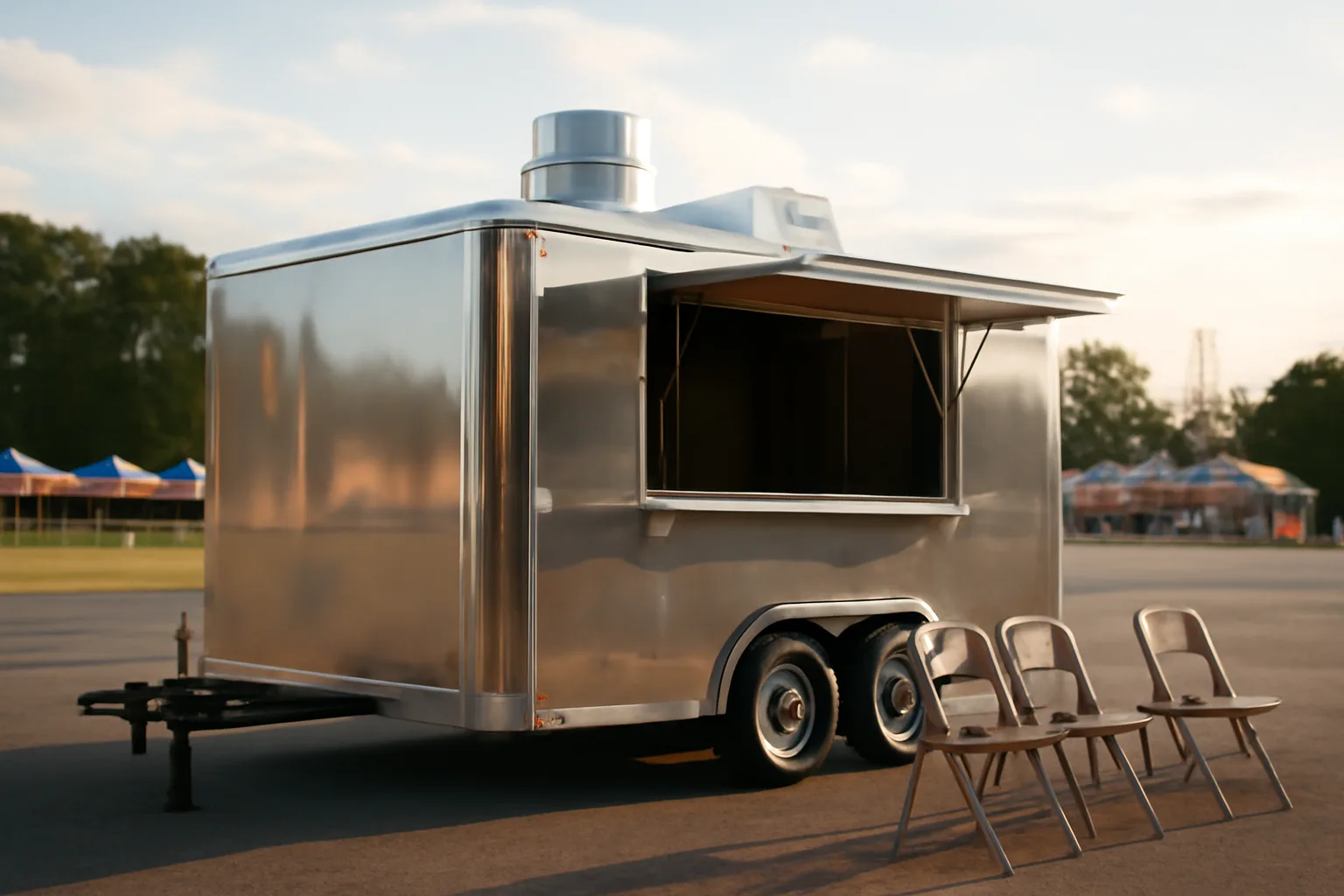
Alabama does not have a single statewide concession trailer board. Instead, your county health department issues the food service permit, the State Fire Marshal sets fire suppression rules for cooking equipment, and your county or city handles business licensing. Expect $50 to $400 in permit fees depending on county, plus trailer and equipment costs that typically run $10,000 to $60,000 for a new build.
Who actually regulates concession trailers in Alabama?
There is no single Alabama Concession Trailer Board. That surprises a lot of first-timers who Google the phrase expecting one agency with one application. What you're actually dealing with is a layered system with three distinct authorities, each owning a piece of the approval.
First is the Alabama Department of Public Health (ADPH), which sets statewide food service rules under the Alabama Food Service Establishments law (Alabama Code Title 22, Chapter 20) [1]. ADPH writes the standards, but it delegates day-to-day permitting to county health departments. So your actual permit comes from the county where you operate most often, not from Montgomery.
Second is the Alabama State Fire Marshal's Office, which enforces fire suppression requirements for any trailer cooking with open flame, fryers, or grills [2]. If you're running a flat-top grill or a deep fryer, you need a UL 300 or equivalent fire suppression system in your hood, and that system has to be inspected and tagged before you open for business.
Third is your local city or county for a general business license. Some municipalities also require a separate mobile vendor or peddler's permit to operate on public property or at events. Unincorporated county land falls under county commission rules instead.
The practical result: you'll touch at least three agencies before you sell a single plate. Plan for that timeline, not a single one-stop application.
Do you need a license for a concession trailer in Alabama?
Yes, you do. Multiple licenses, actually. Here's the short list of what Alabama concession trailer operators typically need before opening day.
1. County health department food service permit. This is the big one. The county environmental health office inspects your trailer, checks your water supply and wastewater setup, reviews your menu, and issues a permit specific to your operation class. Alabama classifies mobile food units by risk level: low-risk (prepackaged goods, no cooking), medium-risk (limited cooking), and high-risk (full cooking with temperature-sensitive foods). A high-risk trailer doing burgers and chicken faces a more thorough inspection than one selling bagged popcorn.
2. Food handler certification. At least one person on your trailer must hold a valid food handler card from an ADPH-approved provider. ServSafe is the most common one in Alabama [3]. The certificate is valid for three years.
3. Fire suppression inspection tag. If you have a Type I hood (required for cooking equipment producing grease-laden vapors), the suppression system must be serviced and tagged by a licensed fire protection company, typically every six months [2]. The tag is what the fire marshal's office or local fire inspector looks for.
4. City or county business license. Fees vary widely. Birmingham, Huntsville, and Mobile each have their own schedules. Some smaller cities charge a flat $50 to $100 annually; others calculate it on projected gross revenue.
5. Sales tax registration with the Alabama Department of Revenue. Food sold from concession trailers is generally subject to Alabama's 4% state sales tax, plus local rates. You register for a seller's permit through My Alabama Taxes (MAT), ALDOR's online system [4].
Some operators also need a cottage food exemption review if they make any baked goods at home, though Alabama's Cottage Food Law (Alabama Code Section 2-3-4.1) only covers direct-sale products and has its own separate conditions [5].
Bottom line: plan for at least four separate approvals before you're fully legal. None of them take the place of another.
How much does a concession trailer cost in Alabama?
The question has two parts: what does the trailer itself cost, and what does the licensing process cost? They're very different numbers.
Trailer and equipment costs
A used concession trailer in Alabama (think 8x16 feet, basic cooking setup, in serviceable condition) typically runs $8,000 to $20,000 depending on age and what's already in it. A new custom build from an Alabama or Southeast-based fabricator generally starts around $20,000 for a bare-bones layout and can reach $60,000 or more once you spec a commercial hood system, three-compartment sink, generator, and a full cooking line [6]. Fabrication lead times from reputable shops currently run 8 to 20 weeks for new builds; confirm current lead times with the shop directly.
Permit and licensing costs
This varies by county, and the ADPH does not publish a single statewide fee schedule for mobile units because counties set their own rates. The table below shows the range you're likely to encounter. Confirm exact fees with your county health department before you budget.
| Cost Item | Low Estimate | High Estimate | Notes |
|---|---|---|---|
| County health permit (annual) | $50 | $400 | Varies by county and risk class |
| Food handler certification (ServSafe) | $15 | $35 | Per person, online or in-person exam |
| Fire suppression inspection/tag | $150 | $350 | Per inspection; every 6 months if required |
| City/county business license (annual) | $50 | $500 | Revenue-based in some cities |
| ALDOR sales tax registration | $0 | $0 | Free through My Alabama Taxes |
| State entity registration (LLC) | $150 | $200 | One-time; through Alabama SOS |
So the pure paper costs for year one typically land in the $500 to $1,500 range, not counting the trailer, equipment, or supplies. The trailer and equipment are what eat your capital.
For first-time operators building out the compliance side, ConcessionPath's Health + Fire-Suppression Kit ($149, one-time) covers the documentation checklists for the health inspection and the fire suppression tag review so you're not walking into your county office guessing what the inspector wants to see. Find it at /start.
One honest note on pricing uncertainty: nobody tracks Alabama mobile food permit fees in a single public database. The range above is assembled from county environmental health fee schedules and is accurate as of this writing, but confirm with the relevant board before you budget.
How long does the concession trailer licensing process take in Alabama?
Realistic answer: four to twelve weeks from first application to your first legal sale, assuming you don't hit avoidable snags. Here's where the time goes.
The county health department inspection is usually the longest leg. Some county offices are prompt and can schedule you within two to three weeks of receiving your application. Others, especially rural counties with small environmental health staffs, may take six to eight weeks just to get on the schedule. Call before you submit the paperwork to get a realistic sense of current wait times in your specific county.
The fire suppression tag is faster if your system is already installed and just needs inspection. A licensed fire protection company can usually schedule that within a week or two in most Alabama markets. If your system needs installation or modification, add the fabricator's lead time on top.
The city business license is often the fastest piece: many Alabama cities process them over the counter or within a few days online.
Sales tax registration through My Alabama Taxes is typically issued within one to three business days of completing the online application [4].
The most common delay people don't anticipate: the county inspector finds a plumbing or equipment issue during the initial inspection, and you have to fix it and reschedule. A three-compartment sink not properly sized, a handwashing sink missing, a water heater that doesn't meet temperature requirements. These re-inspection cycles can add two to four weeks to your timeline easily.
If you're planning to open for a specific event, work backwards from that date and add a four-week buffer. Don't assume approval.
What does the Alabama county health inspection actually check?
The county environmental health inspector is looking at your trailer through the lens of the Alabama Food Service Establishment Rules, which track closely with the FDA Food Code [9]. Specifically, expect the inspector to check:
Water system. You need a potable water source (either a built-in tank with documented capacity or a connection point for a municipal supply) and a separate wastewater holding tank sized at least 15% larger than your fresh water supply. They'll check both tanks and your hose connections.
Handwashing sink. Must be separate from your three-compartment sink, supplied with hot and cold running water, soap, and paper towels. This is a very common citation point. If your handwashing sink is missing or shares a basin with your prep sink, you fail.
Three-compartment sink. Required for manual warewashing. Compartments need to accommodate your largest utensil or piece of equipment.
Temperature control. Your refrigeration must maintain 41 degrees Fahrenheit or below. Your hot-hold equipment must hold cooked food at 135 degrees Fahrenheit or above. The inspector will check with a calibrated probe thermometer.
Hood and ventilation. If you're cooking with equipment that produces grease-laden vapors (fryers, griddles, char-broilers), you need a Type I hood with a working fire suppression system. The inspector will verify the suppression tag is current.
Pest exclusion. Gaps, cracks, and open seams in the trailer shell are a citation. Screens on windows that open.
Food storage. No food stored on the floor. Dry goods in sealed containers. Raw proteins stored below ready-to-eat foods in the cooler.
Bring your menu to the inspection. The inspector uses it to assess whether your equipment matches what you're cooking, and whether your risk classification is correct.
What are Alabama's fire suppression rules for concession trailers?
The Alabama State Fire Marshal's Office enforces the current edition of NFPA 96 (Standard for Ventilation Control and Fire Protection of Commercial Cooking Operations) for mobile cooking setups [8]. That standard is what determines whether you need a Type I or Type II hood, what suppression system is required, and how often it has to be serviced.
For any cooking equipment that produces grease-laden vapors (fryers, open-flame grills, flat-top griddles, char-broilers), you need a Type I hood and an automatic fire suppression system. The suppression system must be UL 300 listed or equivalent, and it must be inspected and tagged by a licensed fire protection contractor. NFPA 96 requires inspection every six months for most systems.
If you're only doing low-heat cooking (hot dogs on a steam table, coffee, pre-cooked wrapped items) with no open flame or grease, a Type II hood may suffice. But if there's any ambiguity about your cooking equipment, assume Type I and budget accordingly. Getting caught with the wrong setup at a county fair or large event can get you shut down on the spot.
The fire suppression system itself (ansul or equivalent wet chemical system, hood, ductwork) typically runs $2,000 to $5,000 installed in a new concession trailer build. Service and tagging runs $150 to $350 per inspection visit. Factor in two visits per year if you operate continuously.
Local fire marshals in some Alabama cities (Birmingham, Mobile, Huntsville) do their own inspections independent of the state. Check with the local fire department for the city or county where you'll operate to confirm whether they require a separate permit or inspection.
Do you need a separate permit for each county or city in Alabama?
This is one of the most common questions Alabama mobile food operators run into, and the honest answer is: it depends on the county, and the rules are inconsistent.
Your home county health department issues your base permit for the county where you primarily operate or where your commissary is located. If you operate in other counties for events or regular routes, some counties will honor your home county permit for temporary events (typically less than 14 days in a calendar year). Others require a separate temporary food establishment permit for each event, even if you already have a permit elsewhere.
The ADPH does not have a formal statewide reciprocity agreement that lets one county permit automatically cover all others. That means if you're a barbecue trailer hitting five different counties in a summer festival season, you may need to apply for temporary event permits in each of them.
Calls to clarify: before each multi-county event, call the county environmental health office for that county and ask specifically whether they require their own permit for your trailer or whether your existing county permit covers you for temporary events. Get the name of the person who tells you it's fine. Don't rely on what worked last year; county policies can change with staff turnover.
For city-specific events (block parties, farmers markets on city property), the city may also require a separate mobile vendor permit from the city clerk's office, on top of the county health permit. Birmingham, Huntsville, and Mobile each have municipal codes that address this. Verify with the specific city before you commit to an event.
What is a commissary and do Alabama concession trailers need one?
A commissary is a licensed commercial kitchen that acts as your base of operations for food prep, storage, and cleaning. Alabama's food service rules do not require every mobile food unit to have a commissary in the same way some states do, but county health departments will ask where you're doing your prep, where you're storing food, and where you're cleaning your equipment at the end of service.
If your trailer has a fully self-contained three-compartment sink, adequate water and wastewater capacity, and refrigeration, many county inspectors will approve the trailer itself as your primary food prep and sanitation unit. You still need a documented source for potable water and a legal way to dispose of wastewater.
If your trailer is smaller or doesn't have full onboard facilities, the inspector will want to know where you're handling prep work. That means either a licensed commissary kitchen you rent by the hour, your own licensed commercial kitchen, or a restaurant kitchen where you have a documented arrangement.
The commissary requirement is one area where county-to-county variation is real. Some county inspectors in Alabama are strict about requiring a commissary agreement even for trailers with onboard facilities. Others focus on the trailer itself. Ask your county environmental health office directly before you invest in kitchen rental agreements you might not need.
How does operating at Alabama events and fairs affect your permits?
Large events like the Alabama National Fair, county fairs, and organized festivals often have their own vendor requirements layered on top of your government permits. Event organizers typically require proof of a current health permit, proof of liability insurance (usually $1 million per occurrence minimum), and sometimes an additional vendor fee and proof of your fire suppression tag.
The Alabama Department of Agriculture and Industries oversees some aspects of food safety at agricultural fairs specifically, so very large fair events may have an additional inspection layer [7]. Confirm with the specific fair's management what documentation they require from food vendors.
Liability insurance for a concession trailer in Alabama typically runs $500 to $1,500 per year for a basic general liability policy with a $1 million limit, depending on your menu, revenue projection, and insurer. Some events require you to name the event organizer as an additional insured on the policy. Get your certificate of insurance before you apply to events; most ask for it upfront with your vendor application.
For a detailed look at how neighboring states handle their inspection and permitting boards, the Georgia setup is a close comparison given the shared regulatory philosophy around county-level enforcement: concession trailer board in georgia. Florida runs a significantly more centralized system through the Division of Hotels and Restaurants and is worth understanding if you operate near the state line: concession trailer board in florida.
What are the most common inspection failures for Alabama concession trailers?
Based on what county health departments across the Southeast flag most frequently in mobile food inspections, the repeat problems fall into a short list.
Missing or improperly set up handwashing sink. This is the single most common reason a new trailer fails its first inspection in counties across Alabama. The sink has to be dedicated to handwashing only, have hot and cold water, soap, and paper towels available, and be accessible without moving equipment.
Wastewater tank undersized relative to freshwater tank. The wastewater holding tank must be larger than your fresh water supply. If you put in a 40-gallon fresh water tank, your grey water tank needs to be at least 46 gallons. Many trailer builders don't explain this requirement clearly.
Fire suppression tag expired or missing. If you bought a used trailer with an existing hood system, the suppression tag may be out of date. Get it inspected and re-tagged before your health inspection.
No thermometer in refrigeration units. You need a working thermometer visible inside each cooler or refrigeration unit. A cheap dial thermometer bolted inside the cooler door satisfies this.
Improper food storage in the cooler. Raw poultry stored above ready-to-eat foods, no date labels on prepped items. The food code storage hierarchy (ready-to-eat on top, whole cuts below, ground meat and fish below that, poultry on the bottom) is consistently enforced.
Fix these five things before your inspection and you eliminate the majority of first-time failures.
Resources and next steps for Alabama concession trailer operators
Getting your Alabama concession trailer legal is a series of sequential steps, not one application. Here's a realistic order of operations.
First, identify which county will be your home county for permitting purposes. Call that county's environmental health office, describe your trailer and menu, and ask what class of mobile food unit you fall under and what their current inspection schedule looks like. That call sets your baseline timeline.
Second, get your food handler certification done. ServSafe's online course is ADPH-recognized and takes about eight hours total [3]. At least one person who will be working the trailer needs this before the health inspection.
Third, confirm your trailer's fire suppression system is properly installed and tagged if you're cooking with open flame or grease-producing equipment. If you're buying a used trailer, don't assume the suppression system is current.
Fourth, register your business entity with the Alabama Secretary of State's office (about $150 to $200 for an LLC filing) and get your sales tax seller's permit through My Alabama Taxes [4].
Fifth, apply for your city or county business license once you have a physical address or registered location.
For the compliance documentation side of this process, ConcessionPath's Health + Fire-Suppression Kit is designed to walk you through exactly what inspectors look for, so you're not going in blind. Details at /start.
For operators curious how Alabama's county-by-county system compares to neighboring states, Arkansas runs a similar decentralized model: concession trailer board in arkansas. If you're considering expansion into markets like Tennessee or Georgia, see also concession trailer board in georgia.
Nobody has perfect data on average Alabama approval timelines because ADPH doesn't publish county-level processing stats. The four-to-twelve-week range is a practitioner estimate based on the structure of Alabama's county health system. Confirm current wait times with your specific county office before you commit to an opening date.
Frequently asked questions
Do you need a license for a concession trailer in Alabama?
Yes. Alabama concession trailer operators need a county health department food service permit, a food handler certification (at least one person per trailer), a fire suppression inspection tag if cooking with open flame or grease-producing equipment, a city or county business license, and a sales tax seller's permit from the Alabama Department of Revenue. That's a minimum of four separate approvals. None replaces another.
How much does a concession trailer cost in Alabama?
A used trailer in serviceable condition typically runs $8,000 to $20,000. A new custom build runs $20,000 to $60,000 or more depending on equipment. Add $500 to $1,500 for first-year permit and licensing fees (county health permit, business license, food handler cert, fire suppression tag). Sales tax registration through My Alabama Taxes is free. Confirm county-specific permit fees directly with your county health department.
How long does the concession trailer licensing process take in Alabama?
Plan for four to twelve weeks from first application to your first legal sale. The county health inspection is usually the longest leg: two to eight weeks for scheduling depending on your county. The fire suppression tag inspection typically takes one to two weeks if the system is already installed. Sales tax registration through My Alabama Taxes processes in one to three business days. Re-inspection delays for equipment issues can add another two to four weeks.
Which state agency oversees concession trailers in Alabama?
The Alabama Department of Public Health (ADPH) sets the statewide food service standards under Alabama Code Title 22, Chapter 20, but permits are issued by individual county health departments. The Alabama State Fire Marshal enforces fire suppression rules. City and county governments handle business licensing. There is no single concession trailer board in Alabama.
Do I need a commissary to operate a concession trailer in Alabama?
Not always. If your trailer has a fully self-contained three-compartment sink, adequate water and wastewater capacity, and refrigeration, many Alabama county inspectors will approve it as a standalone unit. If your trailer lacks full onboard facilities, you'll need a documented commissary arrangement. Requirements vary by county, so confirm directly with your county environmental health office before signing a commissary rental agreement.
How much is a health permit for a concession trailer in Alabama?
County health departments set their own fee schedules, so the cost varies. The typical range across Alabama counties runs $50 to $400 per year, depending on the county and the risk classification of your operation. High-risk mobile food units (full cooking with temperature-sensitive foods) generally pay more than low-risk units selling pre-packaged goods. Call your specific county environmental health office to confirm the current fee.
Do Alabama concession trailers need a fire suppression system?
Yes, if you're cooking with equipment that produces grease-laden vapors: fryers, open-flame grills, griddles, char-broilers. The Alabama State Fire Marshal's Office enforces NFPA 96, which requires a Type I hood with a UL 300-listed automatic fire suppression system. The system must be inspected and tagged by a licensed fire protection contractor, typically every six months. Low-heat or non-cooking setups may qualify for a Type II hood instead.
Do I need a separate permit for each Alabama county I operate in?
Potentially yes. Your home county health permit covers your primary operating area, but other counties may require their own temporary food establishment permits for events held there. Alabama has no statewide reciprocity agreement between county health departments. Before operating in a new county, call that county's environmental health office and confirm whether your existing permit covers you or whether a separate application is required.
What food handler certification is accepted in Alabama?
Alabama Department of Public Health recognizes several nationally accredited providers. ServSafe is the most widely used option in the state. The certification is valid for three years. At least one person working on your concession trailer must hold a current food handler or food protection manager certificate. Some county health departments specify whether they want a handler card or a full manager certification; confirm which applies to your operation.
Do Alabama concession trailers charge sales tax?
Yes. Food sold from concession trailers is generally subject to Alabama's 4% state sales tax, plus applicable local city and county rates. You must register for a seller's permit through My Alabama Taxes (MAT), the Alabama Department of Revenue's online system. Registration is free and typically processes within one to three business days. Some counties have additional local taxes that apply to prepared food sales; check the ALDOR locality table for your specific county.
What are the most common reasons Alabama concession trailers fail their health inspection?
The most frequent failures are: a missing or improperly set up dedicated handwashing sink, a wastewater holding tank smaller than required (must be larger than the fresh water tank), an expired or missing fire suppression tag, no visible thermometer inside refrigeration units, and improper food storage order in the cooler. Fixing these five issues before your inspection eliminates the majority of first-time failures across Alabama counties.
How do I register a concession trailer business in Alabama?
Most operators form an LLC through the Alabama Secretary of State's office, which costs $150 to $200 for the initial filing. After that, register for a state sales tax seller's permit through My Alabama Taxes (free), apply for a city or county business license in your operating municipality, and complete your county health department food service permit application. Do the entity registration first; most other applications ask for your business name or EIN.
What liability insurance do Alabama concession trailers need?
Alabama law does not mandate a specific minimum for concession trailer liability insurance, but event organizers and fair operators almost universally require general liability coverage of at least $1 million per occurrence before allowing you to vend. Annual premiums typically run $500 to $1,500 depending on menu, projected revenue, and insurer. Some events require you to name them as an additional insured on your certificate of insurance.
Can I sell home-baked goods from a concession trailer in Alabama?
Alabama's Cottage Food Law (Alabama Code Section 2-3-4.1) allows direct sale of certain homemade baked goods, but it applies to direct farm-to-consumer or home-to-consumer sales, not resale through a commercial concession trailer operation. If you plan to sell baked goods from a trailer, those items generally need to be produced in a licensed commercial kitchen. Confirm the specific rules for your product type with your county health department.
Sources
- Alabama Department of Public Health, Food Service Establishments Law (Alabama Code Title 22, Chapter 20): ADPH sets statewide food service standards under Alabama Code Title 22, Chapter 20, with county health departments handling local permitting and inspections
- Alabama State Fire Marshal's Office: Alabama State Fire Marshal enforces fire suppression requirements on commercial cooking equipment in mobile food units
- ServSafe Food Handler and Manager Certification Programs: ServSafe is a nationally accredited food safety certification provider recognized in Alabama; certification is valid for three years
- Alabama Department of Revenue, My Alabama Taxes (MAT) Seller's Permit Registration: Alabama concession trailer operators register for a sales tax seller's permit through My Alabama Taxes (MAT); registration is free and processes within one to three business days
- Alabama Legislature, Alabama Code Section 2-3-4.1 (Cottage Food Law): Alabama Cottage Food Law covers direct-sale homemade food products; it does not extend to commercial concession trailer resale operations
- U.S. Small Business Administration, Business Guide: New custom concession trailer builds typically start around $20,000 and can reach $60,000 or more with full equipment packages
- Alabama Department of Agriculture and Industries, Food Safety Division: Alabama Department of Agriculture and Industries oversees food safety inspections at certain agricultural fairs and events in the state
- National Fire Protection Association, NFPA 96 Standard for Ventilation Control and Fire Protection of Commercial Cooking Operations: NFPA 96 requires automatic fire suppression systems inspected every six months for commercial cooking equipment producing grease-laden vapors
- FDA Food Code 2022, U.S. Food and Drug Administration: Alabama food service rules track closely with the FDA Food Code, including temperature control requirements: 41°F or below for cold hold, 135°F or above for hot hold