Last updated 2026-08-18
TL;DR
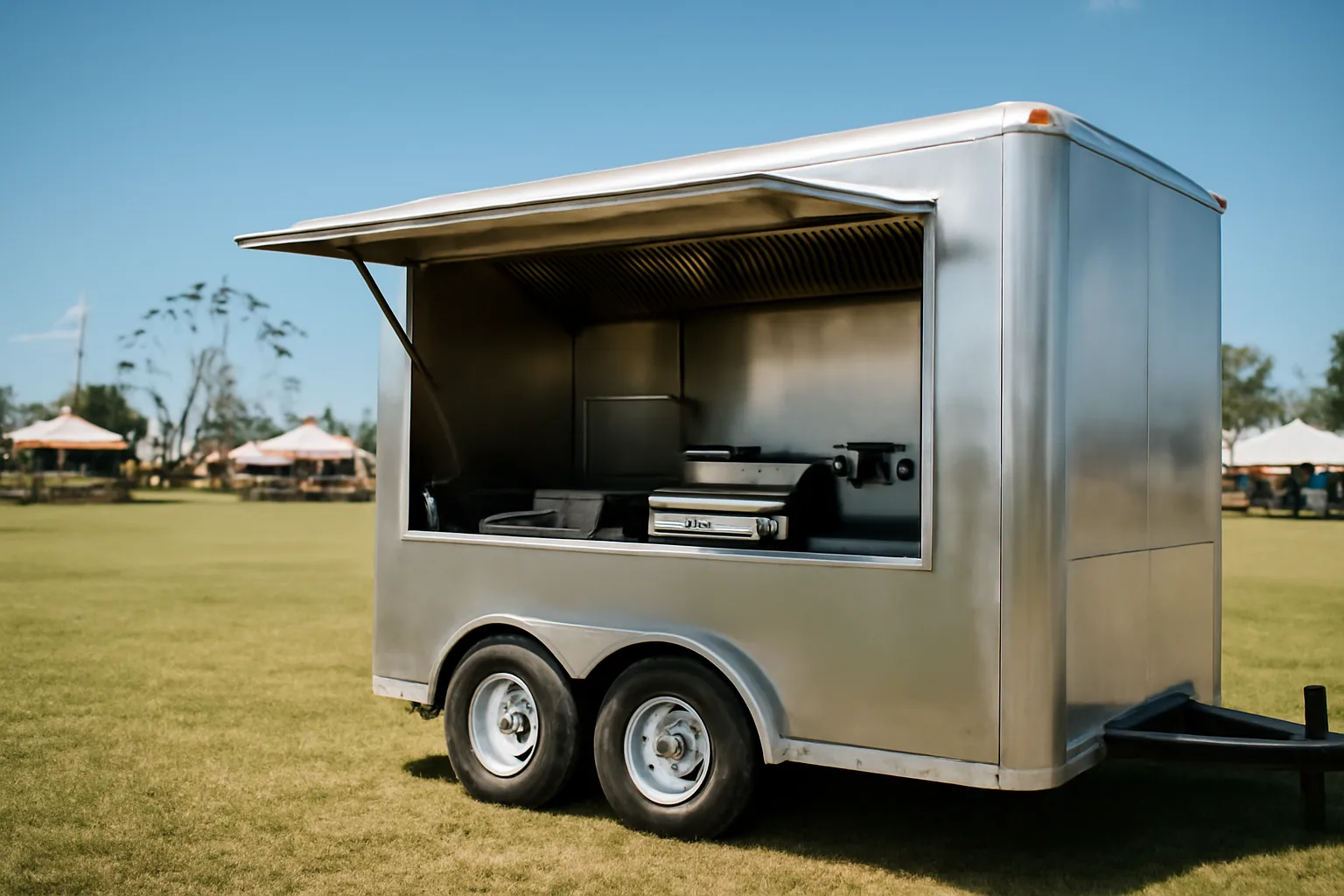
Yes, you need a license to operate a concession trailer in Arkansas. At minimum that means a state Retail Food Establishment permit from the Arkansas Department of Health, a county-level health inspection, a sales tax permit from DFA, and a fire-suppression certification if you cook under a hood. Most operators clear all permits in 4 to 10 weeks and spend $300 to $800 in government fees alone before equipment.
Do you need a license for a concession trailer in Arkansas?
Yes. Arkansas treats a concession trailer as a Retail Food Establishment under Arkansas Code Annotated 20-57-101 et seq., and you cannot legally sell food from one without a state permit issued by the Arkansas Department of Health (ADH), Division of Environmental Health Services [1]. There is no exemption for trailers that move between counties. The permit travels with the unit, not the location.
The state permit covers your trailer as a mobile food unit. What it does not cover is the specific event or venue. Many counties and cities layer on their own temporary food event permits whenever you set up at a farmers market, festival, or fair. Expect to file a separate short-form application with the local health unit for each recurring event location, or at minimum notify them in advance. Confirm the exact county requirement with the local ADH regional office before you book your first gig.
On top of health permits, you need a sales tax permit from the Arkansas Department of Finance and Administration (DFA) before you collect a single dollar [2]. Arkansas taxes prepared food, so you are a retailer from day one. This permit is free and you can get it online. Finally, if your trailer has a commercial cooking hood and you run a fryer, charbroiler, or similar open-flame equipment, Arkansas fire codes require a UL 300 or equivalent fire-suppression system inspection and certification. That cert renews annually in most jurisdictions. Confirm the specific code cycle your county enforces with your local fire marshal.
What Arkansas state permits does a concession trailer actually need?
Here is every layer, in the order you should chase them.
1. ADH Retail Food Establishment Permit (Mobile Unit) This is your foundational document. You apply through the Arkansas Department of Health's Environmental Health office. The application asks for your menu, equipment list, water source, wastewater disposal plan, and commissary agreement if you do not have a licensed prep kitchen on the trailer [1]. Arkansas requires mobile food units to operate from a licensed commissary for tasks like ware-washing and potable water refills unless the trailer is fully self-contained with a three-compartment sink and adequate tank capacity.
2. Commissary Letter or Self-Sufficiency Documentation If your trailer cannot handle all food prep, ware-washing, and water exchange onboard, you must attach a signed commissary agreement to your permit application. The commissary itself must be a licensed food establishment. This is the step that trips up most first-timers. They submit the application without the commissary letter and then wait two to three extra weeks while it sits pending.
3. County or City Health Event Permits When you set up at a temporary event, the county health unit often requires a Temporary Food Service permit or notification form. Some Arkansas counties handle this as a letter of approval from the regional ADH office rather than a separate permit. Fee varies by county. Confirm with your specific county before assuming it is the same statewide.
4. Arkansas Sales Tax Permit (DFA) Free to get, required before first sale, available at the DFA online portal [2]. You collect and remit sales tax on prepared food at the current Arkansas state rate of 6.5 percent, though local city and county rates stack on top of that [3].
5. Business Entity Registration If you operate as an LLC or corporation, you register with the Arkansas Secretary of State [4]. Sole proprietors doing business under their own legal name technically skip this, but most operators file a DBA (Doing Business As) with the county clerk for a nominal fee so they can open a business bank account.
6. Fire-Suppression System Certification Required for trailers with commercial cooking equipment under a hood. A certified fire-suppression technician inspects and tags the system. Annual recertification is standard. Confirm the exact schedule with your local fire marshal.
How much does a concession trailer license cost in Arkansas?
Government fees for an Arkansas concession trailer operation stack like this:
| Permit / License | Fee Range | Agency |
|---|---|---|
| ADH Retail Food Establishment Permit (mobile) | $100 to $250/year | Arkansas Dept. of Health [1] |
| Temporary Food Event Permit (per event or annual) | $25 to $75 per event | County ADH regional office |
| Arkansas Sales Tax Permit | $0 | DFA [2] |
| LLC Formation (if applicable) | $45 (online) | AR Secretary of State [4] |
| DBA / Trade Name Filing | $25 to $35 | County Clerk |
| Fire-Suppression System Inspection and Cert | $150 to $400 | Licensed contractor |
| Commissary Agreement (if third-party kitchen) | $0 to $200/month | Private negotiation |
The ADH mobile food permit fee is set by agency rule and tiered by operation size. The figures above reflect the range as of the most recent published ADH fee schedule. Confirm the current amount directly with ADH, because fees update periodically [1].
Total first-year government fees for a typical owner-operated trailer running a simple menu land around $300 to $600, not counting the fire-suppression cert. Add the fire-suppression inspection and you are closer to $500 to $1,000 in pure licensing and compliance spend before you touch equipment.
The trailer itself is the dominant spend. A used, road-ready concession trailer in Arkansas typically runs $15,000 to $45,000 depending on size and equipment load. A new custom build from an Arkansas or regional fabricator can push $60,000 to $120,000. Generator, smallwares, initial food inventory, and signage add another $3,000 to $10,000 on top. These are market-range estimates from industry listings. Prices vary a lot by vendor and configuration, so get three quotes before committing.
Fire-suppression is one line operators consistently underestimate. A new system installed on a trailer that did not ship with one can run $1,500 to $3,500, separate from the annual inspection fee. If you buy a used trailer, verify the suppression system is UL 300-compliant before purchase and ask for the last inspection certificate.
How long does it take to get a concession trailer license in Arkansas?
Budget 4 to 10 weeks from application to operating permit in hand. That is the honest range. The ADH review timeline depends on your regional office caseload, how complete your application is on the first submission, and whether an in-person inspection is required.
Here is where time actually gets lost:
Incomplete applications. A missing commissary letter, incomplete menu, or no equipment spec sheet adds at least one to two weeks while ADH waits for your response and cycles the file back through the queue.
Scheduling the physical inspection. ADH inspects the trailer before issuing the permit. Inspector availability in rural Arkansas counties can mean a two to four week wait after your paperwork clears. In Little Rock and the northwest Arkansas corridor, turnaround is generally faster.
Fire-suppression scheduling. Certified technicians are sometimes booked two to three weeks out. Do not wait until after you receive health approval to schedule this. Call a technician the same week you submit your health permit application.
The sales tax permit through DFA processes quickly, often within one business day online [2]. Business entity registration with the Secretary of State takes one to three business days for online filings [4].
Want to hit a specific opening date? Work backward ten weeks and start your application stack then. That buffer absorbs one revision cycle from ADH and a reasonable inspector scheduling delay. Operators who assume two weeks and skip the buffer regularly miss their first booked event.
How does the Arkansas commissary requirement work?
Arkansas, like most states, requires mobile food units to have a base of operations: a licensed food establishment where you store food, wash equipment, and refill potable water when the trailer cannot handle all of that onboard [1]. That base is the commissary.
Your options are:
1. A fully self-contained trailer. If your trailer has a three-compartment sink, an adequately sized potable water tank, a wastewater tank that meets ADH volume requirements, and refrigeration that holds proper temps, you may qualify as self-contained. ADH verifies this during the inspection. If you go this route, document your tank capacities in the application.
2. A shared commercial kitchen. Restaurants, church kitchens, and food business incubators sometimes rent commissary access by the hour or month. You sign an agreement, the commissary operator signs it too, and you attach the agreement to your ADH application.
3. A second licensed facility you own. If you already run a licensed kitchen, that works as your commissary. Attach proof of that establishment's permit.
The commissary agreement does not need to be elaborate, but it needs the commissary address, the signature of the responsible party at that location, and a statement that they will allow you access for the listed services. ADH has a template in some regional offices. Ask when you pick up your application packet.
What does the Arkansas Department of Health inspection look for?
The ADH inspector physically examines your trailer before issuing the permit. They work from the Arkansas Food Code, which the state adopted with modifications from the FDA Food Code [5]. The main checkpoints:
Temperature control. Refrigeration must hold 41 degrees F or below. Hot-holding equipment must hold 135 degrees F or above. Have a calibrated thermometer on the trailer. Inspectors will ask to see it.
Water and wastewater. The potable water tank must be labeled and separate from the wastewater tank. The wastewater tank must be at least 15 percent larger than the potable tank. Drain lines cannot cross-connect.
Handwashing. A dedicated handwashing sink, separate from the prep and ware-washing sinks, with hot and cold water, soap dispenser, and paper towels. This is the most commonly cited deficiency on first inspections.
Surfaces. Food-contact surfaces must be smooth, non-porous, and cleanable. Raw wood is a fail. Caulking and seams cannot trap food debris.
Pest exclusion. All openings to the exterior must be screened or sealed. Gaps around utility penetrations fail.
Labeling and employee practices. You will likely be asked about your food handler training. Arkansas does not require a certified food protection manager on every mobile unit, but having at least one person with a recognized food handler card (ServSafe or equivalent) is a defensible practice, and some county health units expect it [5].
Fix anything on this list before the inspection. A re-inspection fee and scheduling delay are not worth pushing through with a known deficiency.
Do you need a food handler card or food manager certification in Arkansas?
Arkansas law does not require that every employee on a mobile food unit hold a certified food protection manager (CFPM) certification the way some states do. The FDA Food Code, which Arkansas uses as its baseline, recommends at least one certified manager per establishment [5].
In practice, ADH regional offices vary. Some require a CFPM certificate on file. Others accept a food handler card from any accredited program. The safest move is to have at least one person on the operation complete an ANSI-accredited food manager course (ServSafe, National Registry, or similar) before your inspection. The certification exam costs roughly $30 to $75 depending on provider, and the course can be done online in a day.
Food handler cards for other employees are not mandated by state rule but are common sense for a health inspection. Keep them on the trailer.
What vehicle and tow permits does an Arkansas concession trailer need?
Your trailer is a road vehicle as well as a food unit, so Arkansas motor vehicle requirements apply [6]. Key points:
Title and registration. The trailer must be titled and registered through the Arkansas DFA Office of Motor Vehicle. If you bought it out of state, you will need to transfer the title. Registration fees depend on trailer weight. For most concession trailers in the 10,000 to 20,000 GVWR range, annual registration runs $30 to $100. Confirm current fee schedules with the Office of Motor Vehicle [6].
Safety inspection. Arkansas requires an annual vehicle safety inspection for trailers over certain weight thresholds. Check whether your specific trailer's GVWR triggers this.
CDL requirement. If your tow vehicle plus loaded trailer exceeds 26,001 lbs combined gross vehicle weight rating, you may need a commercial driver's license. Most owner-operated concession setups stay well under this threshold, but verify if you are running a large rig.
Towing vehicle insurance. Your personal auto policy likely excludes commercial use. You need a commercial auto policy that covers the tow vehicle while it is used for business. This is separate from your general liability and product liability coverage for the food operation itself.
What insurance does an Arkansas concession trailer operator need?
No state law sets a mandatory minimum insurance amount for a concession trailer food operation in Arkansas, but every real-world operating situation demands it anyway. Event venues, farmers markets, and festivals almost universally require proof of general liability insurance before they let you set up. A $1 million per occurrence / $2 million aggregate general liability policy is the market standard most event organizers ask for.
Product liability coverage is usually included in a general liability policy for food vendors. Make sure yours is. A food-borne illness claim from one customer can exceed your annual revenue.
On the fire-suppression side, some insurers require the UL 300-compliant suppression cert before they will write the policy, or they add a premium surcharge without it. Sort out your fire cert before shopping for insurance so you get an accurate quote.
Commercial auto coverage for the tow vehicle is separate. Expect $1,200 to $2,500 per year for a commercial auto policy on a light-duty truck used for commercial food vending, though rates vary a lot by driver history, vehicle age, and insurer. Get at least three quotes.
Want a single-document kit covering the fire-suppression system documentation and the health compliance paperwork that insurers and event organizers ask for? ConcessionPath offers a Health + Fire-Suppression Kit for a $149 one-time fee at /start. It is not a substitute for getting your actual permits, but it helps you show up to an event organizer or insurer with the right paperwork already organized.
Can you operate in multiple Arkansas counties with one permit?
Yes, in most cases. The ADH Retail Food Establishment permit for a mobile unit is state-issued, so it is valid across Arkansas county lines. You do not need a separate state permit for each county.
Individual county health departments and city environmental health offices sometimes require advance notification or a separate temporary food event permit when you operate at events within their jurisdiction. This is especially common for events with multiple food vendors, where the local health unit wants a list of all participating units.
The practical answer: keep your ADH permit current and bring a copy everywhere. Then call the local county health unit at least two weeks before your first event in a new county and ask whether they require anything extra. Some counties say no, some send you a one-page notification form, and a few charge a small event fee. Do not assume silence means approval.
How do you actually apply for the Arkansas concession trailer permit?
The application goes through the ADH Division of Environmental Health Services. Here is the sequence:
1. Download the Mobile Food Unit permit application from the ADH website or pick it up from your regional office [1]. 2. Complete the application, attach your commissary agreement (or self-sufficiency documentation), menu, and equipment list. 3. Submit the application and fee to your regional ADH office. The state has regional offices covering different county clusters. Use the one that covers your primary base of operations or home county. 4. ADH reviews the paperwork and contacts you if anything is missing. Fix deficiencies fast. The clock does not restart, but reviewer attention moves to other files. 5. Schedule the physical trailer inspection with the ADH inspector assigned to your region. 6. Pass inspection. ADH issues the permit. 7. Display the permit on the trailer where it is visible during operation.
For the sales tax permit, go to the DFA online business tax registration portal and complete the registration for a Retail Sales Tax account [2]. You can do this the same day you submit your ADH application.
For LLC registration, use the Arkansas Secretary of State online portal [4]. Pay the $45 filing fee. The Certificate of Organization processes in one to three business days.
For the fire-suppression cert, hire a licensed fire-suppression contractor in your area. They inspect, service if needed, and tag the system. Keep the inspection report on the trailer.
For how these steps compare in nearby states, see the how to start a concession trailer in Arkansas guide, which covers the business planning layer that sits behind the permit stack.
What are the biggest mistakes first-time Arkansas concession trailer operators make?
A few patterns show up again and again for people entering the concession trailer space in Arkansas:
Skipping the commissary agreement. This single omission causes more permit delays than anything else. If your trailer is not self-contained, get the commissary agreement signed before you submit the application, not after.
Buying a trailer that does not pass inspection. Used trailers sold privately sometimes have plumbing issues, surfaces that fail the food-contact standard, or fire-suppression systems that are out of date or not UL 300-compliant. Have a licensed food service equipment technician do a pre-purchase walk-through before you write the check.
Assuming one event permit covers all events. If the county requires temporary food event permits, you need one per event or per venue depending on how they structure it. Miss this and you get shut down at the gate.
Not registering for sales tax before the first sale. DFA can assess back taxes plus penalties on sales made before registration. The sales tax permit is free and fast. There is no excuse to skip it.
Underinsuring. A $300,000 general liability policy sounds like a lot until an allergen incident lands you in court. The industry standard is $1 million per occurrence for a reason.
Ignoring vehicle registration. Plenty of operators get all the food permits in order and forget the trailer is also a road vehicle that needs current registration and must pass safety inspection if over the weight threshold.
Frequently asked questions
Do you need a license for a concession trailer in Arkansas?
Yes. Arkansas law classifies a concession trailer as a Retail Food Establishment under ACA 20-57-101 and requires a permit from the Arkansas Department of Health before you sell any food. You also need a free sales tax permit from the Arkansas DFA, and a fire-suppression system certification if you cook under a commercial hood. County-level temporary event permits may apply on top of the state permit.
How much does it cost to get a concession trailer license in Arkansas?
The ADH Retail Food Establishment permit for a mobile unit runs roughly $100 to $250 per year. Add a fire-suppression inspection ($150 to $400), LLC formation if applicable ($45), and county event permits ($25 to $75 each). Total first-year government licensing spend is typically $300 to $800. Confirm current ADH fee amounts directly with the agency before budgeting, as the fee schedule updates periodically.
How long does it take to get a concession trailer permit in Arkansas?
Budget 4 to 10 weeks from a complete application submission to permit in hand. The most common delays are an incomplete first submission (adds one to two weeks), inspector scheduling in rural counties (two to four weeks), and fire-suppression technician availability. The DFA sales tax permit and Secretary of State LLC registration both process in one to three business days.
Does Arkansas require a commissary agreement for mobile food units?
Yes, unless your trailer is fully self-contained with a three-compartment sink, adequately sized potable water and wastewater tanks, and onboard refrigeration. If the trailer cannot handle ware-washing, food storage, and water exchange independently, you must attach a signed commissary agreement from a licensed food establishment to your ADH permit application.
What is the Arkansas food code standard that concession trailers must meet?
Arkansas adopted the FDA Food Code with state-specific modifications as its baseline retail food safety standard. Key requirements for trailers include 41 degrees F or below cold holding, 135 degrees F or above hot holding, a dedicated handwashing sink, smooth and cleanable food-contact surfaces, properly sized separate potable and wastewater tanks, and pest exclusion at all exterior openings.
Does an Arkansas concession trailer need a CDL to operate?
Only if the combined gross vehicle weight rating of your tow vehicle plus loaded trailer exceeds 26,001 pounds. Most owner-operated concession setups stay under that threshold. Verify your specific rig's GVWR before assuming you are exempt. The Arkansas DFA Office of Motor Vehicle handles this determination; confirm with them rather than relying on general estimates.
Can you sell food at farmers markets in Arkansas without a full food establishment permit?
Arkansas does have a Cottage Food exemption for certain low-risk, non-potentially-hazardous foods sold directly to consumers, but it does not cover most concession trailer operations that use cooking equipment or sell temperature-controlled foods. If you operate a trailer with cooking equipment, you need the ADH Retail Food Establishment permit. Confirm whether your specific product qualifies for any exemption before assuming it applies.
Does Arkansas require a food manager certification for concession trailers?
State law does not universally mandate a certified food protection manager on every mobile unit, but ADH regional offices vary in practice. Some expect a certified manager certificate on file during inspection. Having at least one operator complete an ANSI-accredited food manager course (ServSafe or similar) before inspection is the safe default. Exam costs run roughly $30 to $75.
Is a concession trailer considered a permanent establishment for sales tax purposes in Arkansas?
Arkansas DFA treats prepared food sold from a mobile food unit as taxable retail sales regardless of where the trailer is parked. You register once for a statewide sales tax account. The state rate on prepared food is 6.5 percent, with local city and county rates stacking on top of that. File and remit on the schedule DFA assigns at registration.
What insurance does an Arkansas concession trailer operator need?
There is no Arkansas state-mandated minimum, but event venues and markets almost universally require general liability coverage of $1 million per occurrence / $2 million aggregate. Product liability should be included in that policy. You also need commercial auto coverage for the tow vehicle; a personal auto policy typically excludes commercial use. Fire-suppression certification affects whether an insurer will write the policy at standard rates.
Can an Arkansas concession trailer operate across county lines on a single permit?
The ADH state permit is valid statewide for mobile units. You do not need a separate state permit per county. However, individual counties and cities may require advance notification or a local temporary food event permit when you operate at specific events. Call the county health unit at least two weeks before your first event in a new county to confirm what, if anything, they require.
What fire code applies to concession trailers in Arkansas?
Arkansas enforces fire codes through local fire marshals. Trailers with commercial cooking equipment under a hood are generally required to have a UL 300 or equivalent fire-suppression system that is inspected and certified annually by a licensed contractor. The exact code edition your county enforces can vary; confirm with your local fire marshal before your first inspection.
How do you register an LLC for a concession trailer business in Arkansas?
File Articles of Organization with the Arkansas Secretary of State online portal. The filing fee is $45. Processing takes one to three business days for online submissions. After formation, obtain an EIN from the IRS (free, online, same-day), then register for your Arkansas sales tax account with DFA. You will need the LLC's EIN for both the DFA registration and your ADH permit application.
What happens if you operate a concession trailer in Arkansas without a permit?
Operating without a valid ADH retail food permit is a violation of Arkansas Code 20-57-101. ADH can issue a stop-sale order and a civil penalty. The DFA can assess back taxes plus penalties for sales made without a sales tax permit. Event organizers who discover unlicensed vendors typically remove them from the event immediately. The compliance cost is always lower than the penalty cost.
Sources
- Arkansas Department of Health, Environmental Health Services: Arkansas classifies concession trailers as Retail Food Establishments requiring an ADH permit; commissary and inspection requirements for mobile units
- Arkansas Department of Finance and Administration, Sales and Use Tax: Arkansas sales tax permit is required before first retail food sale; registration is free and available online
- Arkansas Department of Finance and Administration, Sales and Use Tax: Arkansas state sales tax rate on prepared food is 6.5 percent, with additional local rates stacking on top
- Arkansas Secretary of State, Business and Commercial Services, LLC Formation: Arkansas LLC formation filing fee is $45 online; online filings process in one to three business days
- U.S. Food and Drug Administration, 2022 Food Code: FDA Food Code requirements for temperature control, handwashing facilities, food-contact surfaces, and certified food protection manager recommendations adopted as Arkansas baseline
- Arkansas Department of Finance and Administration, Office of Motor Vehicle: Arkansas requires trailers to be titled and registered; registration fees based on trailer weight
- Arkansas Code Annotated Title 20, Chapter 57, Retail Food Establishment Act: Arkansas Code 20-57-101 et seq. is the statutory basis requiring a retail food establishment permit for concession trailers
- Underwriters Laboratories, UL 300 Standard: UL 300 is the applicable standard for commercial cooking hood fire-suppression systems required for concession trailers with open-flame or high-heat cooking equipment
- Arkansas Department of Health, Environmental Health Rules: Arkansas Food Establishment Sanitation Rules set the inspection checklist criteria for mobile food units including tank sizing, handwashing sink requirements, and surface standards
- National Restaurant Association Educational Foundation, ServSafe Food Manager Certification: ANSI-accredited food manager certification exam costs and program availability referenced for Arkansas operator training options