Last updated 2026-08-19
TL;DR
A concession trailer in Colorado costs the market price of the kitchen plus 2.9 percent state sales tax, title, specific ownership tax, a local retail food license, fire approval, and first-year operating bills. Used units often sit in the low tens of thousands. New custom builds run much higher. There is no statewide trailer price list. Confirm health fees with the county that inspects you.
How much does a concession trailer cost in Colorado?
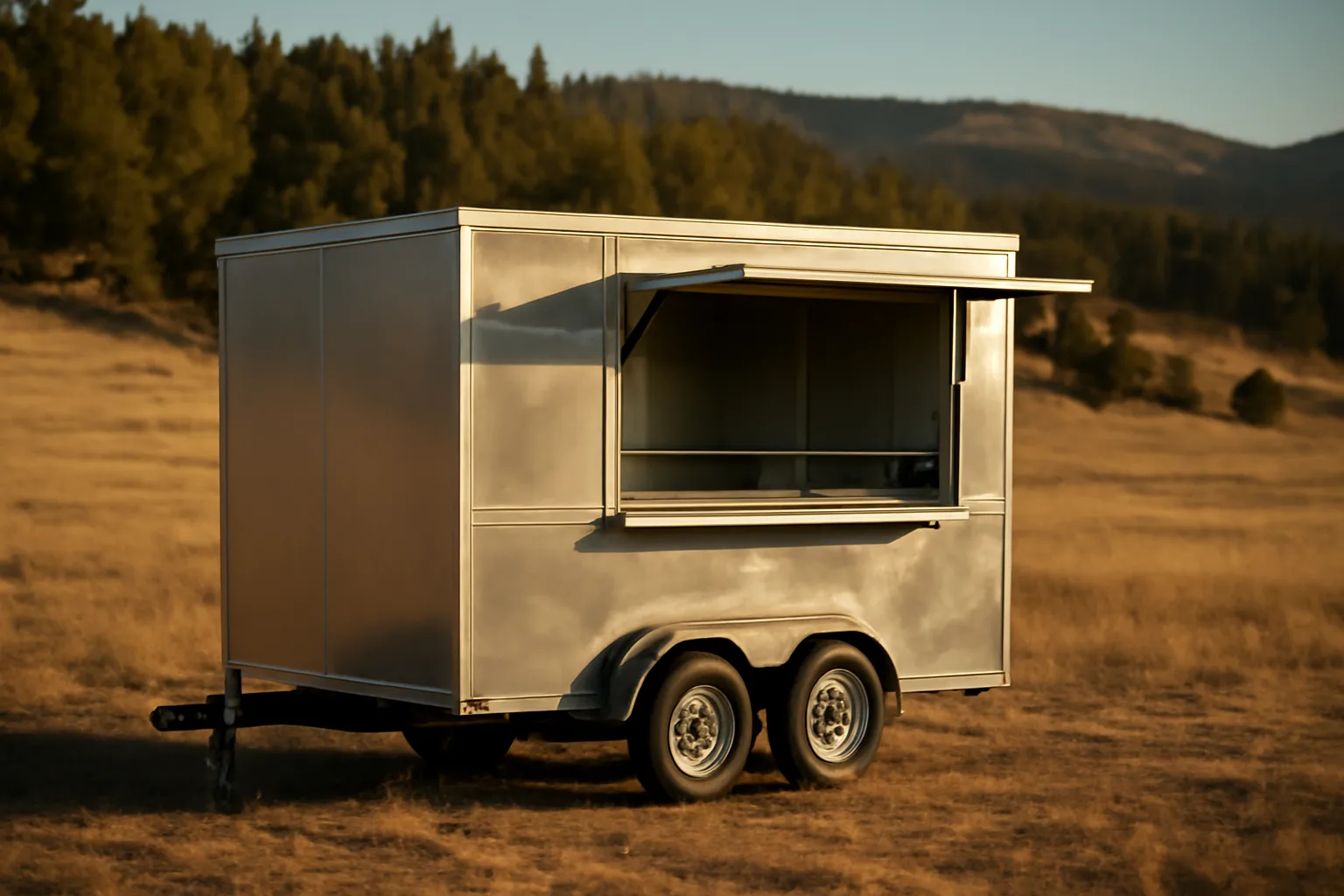
You pay a private-market price for the kitchen, then you pay Colorado for tax and title, then you pay your county for the right to sell food. The box is the big number. Used, already-built kitchens often change hands from the low tens of thousands into the mid tens of thousands. New custom 7x14 and 8x16 units often start near $40,000 and climb past $100,000 once you add a hood, suppression, refrigeration, and power. Those are listing ranges, not a state schedule. There is no official Colorado concession trailer price index.
The government dollars you can pin down statewide are thinner. Colorado's state sales tax rate is 2.9 percent per the Colorado Department of Revenue. [1] The Colorado Secretary of State charges $50 to file Articles of Organization. [2] Health license and plan-review fees are local. They flow from the Food Protection Act and 6 CCR 1010-2, and the county or district board sets the price. [4][5] Confirm that schedule before you buy the trailer.
| Cost piece | What you are paying | Who sets it |
|---|---|---|
| Kitchen trailer | Used or new mobile kitchen | Private seller |
| State sales tax | 2.9 percent of the taxable price | Colorado Department of Revenue [1] |
| Local sales tax | City, county, and district add-ons | Local taxing districts [1] |
| Title, registration, SOT | Plate plus specific ownership tax | County motor vehicle office [6] |
| Retail food license | Plan review and annual mobile fee | County or district health [4][5] |
| Fire approval | Hood inspection and suppression tag | Local fire authority |
| LLC articles | $50 filing | Secretary of State [2] |
Don't treat a Facebook "turnkey, permitted" caption as a quote. Permits do not transfer the way people think they do. Budget the trailer, look up sales tax for the titling location, ask the clerk for an SOT estimate, then call health and fire. If the cash left over cannot cover commissary and a slow winter, the trailer is too expensive.
What does the trailer itself usually sell for?
Used concession trailers that already have a three-compartment sink, a hand sink, water tanks, and a hood are the units that actually pass plan review. Bare cargo trailers look cheap and then eat the savings. Expect used, already-built kitchens to list across a wide band, often roughly $12,000 to $45,000 depending on year, rust, and whether the suppression bottle is still in certification. New custom kitchens from regional builders often land between about $40,000 and $90,000 before the tow vehicle. Those are market ranges. The uncertainty comes from private listings, not from a Colorado price index, because there is not one.
A cheap box with no grease hood is not a deal if you plan to fry. Fire marshals will stop you. A used trailer with a tagged suppression system and recent tank work beats a shiny wrap on a rotting frame.
Look at the frame, the axle rating, the propane lines, and whether the electrical is a real panel or a rat's nest. Pay an inspector who has seen mobile kitchens. A general auto mechanic will miss the health stuff.
If you are comparing other states for used inventory, steel prices look similar in Arizona and Idaho. What changes is the paper after you park it.
Do you need a license for a concession trailer in Colorado?
Yes. Colorado does not issue one magic statewide concession trailer license, but you cannot legally sell most foods from a trailer without a retail food establishment license from the local public health agency where you operate. [4][5] You also need a Colorado sales tax license from the Department of Revenue, a titled and registered trailer, and usually a fire sign-off on the hood and suppression system. [6][7]
Cottage-food rules will not cover a concession trailer. The Colorado Cottage Foods Act is a short list of non-potentially hazardous foods sold in a narrow way. It is not a mobile kitchen permit. [10]
Most counties also want a commissary agreement unless they approve you as fully self-contained. That is a license condition, not a suggestion. Special events can add park, downtown, or right-of-way permits on top of the health license. Denver runs its own food-safety path for mobile units. El Paso, Jefferson, Boulder, Adams, and Arapahoe do too. Confirm with the department that will inspect you. Do not mail CDPHE a check and assume you are done. CDPHE writes the rulebook. Counties stamp the license.
6 CCR 1010-2 is built on the FDA Food Code model, so many inspectors also expect a certified food protection manager on staff. [4][14] Confirm the current certificate rule with your county. If you hire anyone, workers' compensation insurance is required in Colorado. [8] That is separate from the food license.
How long does a concession trailer take in Colorado?
There is no official statewide clock, and anyone who promises you a guaranteed open date is selling. Entity filing with the Secretary of State is often quick once the paperwork is right. Confirm current processing on the SOS site. [2] A sales tax account goes through the Department of Revenue. [7] Title and registration happen at a county motor vehicle office and depend on a clean title and tax payment. [6][12]
The slow parts are the ones you do not control. Plan review at the local health department can be short in a quiet county or much longer in a busy Front Range office. Fire inspection happens after the hood and suppression are installed and tagged. If you are buying a used trailer, budget time to fix whatever the plan reviewer flags (tank sizes, finish surfaces, window screens, a missing hand sink). If you are building new, body shops quote months, not weekends.
Don't quit the day job until the health department has accepted the plan and the fire marshal has a date. Menu changes after plan review restart the clock. Confirm timelines with your county. No article can hold a slot for you.
Winter on the Front Range is a real scheduling factor. Some departments book slower around holidays. Builders also slip. Pad your calendar.
What taxes hit the purchase and the register?
When you buy the trailer, Colorado sales tax applies unless a narrow exemption fits, and most private buys do not. The Colorado Department of Revenue sales tax rates page puts it plainly: "The state sales tax rate is 2.9%." [1] Cities, counties, and special districts add local rates. Combined rates vary by address. Use the DOR rate lookup, not a blog.
At registration you also pay specific ownership tax plus a registration fee. Specific ownership tax is a Colorado vehicle tax that declines as the unit ages. The county clerk calculates it from taxable value and class. [6] Ask the clerk for an estimate before you wire a seller, because SOT on a high-value new trailer is not a rounding error.
Once you sell food, you collect sales tax on taxable sales and file through the Department of Revenue. [7] Get the sales tax license before the first event. Charging tax without an account, or skipping tax because a festival felt informal, is how people get expensive letters.
Federal self-employment tax is separate. The IRS sets self-employment tax at 15.3 percent on net earnings. [3] The IRS says, "The self-employment tax rate is 15.3%. The rate consists of two parts: 12.4% for social security (old-age, survivors, and disability insurance) and 2.9% for Medicare (hospital insurance)." [3] That is on profit, not on trailer cost, but it belongs in a first-year model. IRS Publication 946 explains how to depreciate business property if a CPA later tells you the trailer qualifies. [11]
What first-year operating costs sit on top of the trailer?
The box is not the business. Year one cash usually leaks through commissary rent, propane, gasoline or diesel for the tow rig and generator, ice, event booth fees, card processing, insurance, repairs, and the weeks you sit still because of wind, snow, or a failed inspection.
Commissary rent on the Front Range is a private market. I have seen operators treat it as optional. In many Colorado counties it is not. Budget a monthly number you can live with, then confirm the health department will accept that commissary.
Event fees at municipal festivals and private markets vary. Some city parks want a vending permit. Some private lots just want a certificate of insurance. None of that sits in 6 CCR 1010-2. [4]
Labor is a real line if you are not solo. If you pay anyone, you owe at least the current Colorado minimum wage (it adjusts, so read the CDLE page for the year you hire) plus wage-and-hour rules. [9] Workers' comp is not optional with employees. [8] Solo operators skip payroll tax but still owe self-employment tax. [3]
Keep a cash reserve equal to a few slow winter months. Colorado concession work is seasonal unless you have indoor events or a heated winter plan. People who spend every dollar on a wrap learn this in January.
How do health, fire, and commissary fees work by county?
Colorado licenses retail food at the local level under Title 25, Article 4, Part 16, and the statewide rule is 6 CCR 1010-2. [4][5] Fees for plan review, pre-operational inspection, and the annual mobile license are set by the county or district board of health. I will not invent those dollar amounts. Denver's program is not El Paso County's program. Call the agency that will inspect the unit and ask for the current mobile retail food fee schedule and plan-review packet.
Fire is a second counter. Grease-laden cooking needs a hood and a suppression system the local fire authority will accept. Semi-annual suppression service is a recurring bill. If the trailer has a lapsed bottle, you will pay to recertify or replace it before anyone signs.
Commissary rules are local too. Many departments require a licensed kitchen for food storage, prep, trailer cleaning, and wastewater. Some allow a fully self-contained unit. Get that decision in writing.
If you want a single stack of the health and fire documents most reviewers ask for, ConcessionPath publishes a $149 one-time Health + Fire-Suppression Kit. It does not replace the county application, and ConcessionPath is an independent publisher, not a law firm and not a filing service. You still send paper to the board.
What would I actually buy, used or new?
I would buy used, from an operator who already passed a Colorado inspection, and I would read that last inspection report before I paid. A trailer a Colorado county already liked beats a prettier unit from out of state with a tiny wastewater tank and no hand sink.
New makes sense if you cannot find a clean used kitchen in your size, or if you need a layout used units never have. New also means you wait on the builder. Used means you wait on repairs.
Don't buy the first cargo-trailer conversion you see on Marketplace. Many of those skip the water-system sizing and the finish materials 6 CCR 1010-2 reviewers look for. [4] Rework costs more than buying a proper used concession.
Skip the expensive wrap in year one. Skip custom interior millwork. Spend on refrigeration that holds temperature at 5,000 feet on a July afternoon, a generator that can start the AC and the freezer together, and a hitch and brakes that match your tow vehicle's rating.
Compare notes with how operators price the box in California or Florida. Equipment prices travel. County fees do not. A concession trailer Colorado reviewers will accept is the one that matches their packet, not the one with the nicest photos.
What insurance and payroll costs should you expect?
There is no Colorado state price list for food-trailer insurance. You typically carry commercial auto (or a trailer endorsement on the tow vehicle), general liability at the limits events ask for, and inland marine or equipment coverage for the kitchen. Some venues want to be named as additional insured. Quotes move with driving record, claims, and whether you cook with open flame.
I will not invent an annual premium. Call two commercial agents who already write mobile food in Colorado and compare. Cheap personal auto policies usually exclude business use. That is a real way to go uninsured at a crash.
Payroll only exists if you hire. Then you have minimum wage, overtime rules, unemployment insurance, and workers' compensation. [8][9] Confirm current wage figures on the CDLE minimum wage page for the year you hire. Do not copy an old blog number.
Solo is simpler and slower. A second person at a busy festival is often the difference between turning tickets and burning food. Hire only when the calendar is real.
Where do people overspend in year one?
Custom paint. Overbuilt social media. A brand-new trailer when a ten-year-old kitchen would have passed. A generator that cannot start the freezer. A fryer you use twice. Paying a consultant to guarantee a license. Nobody can guarantee a Colorado health license except the health department, and they will not.
Another waste: buying out of state and finding your wastewater tank, fresh water, or window setup fails plan review. Fixing plumbing in a finished trailer is miserable.
Also a waste: treating every festival as required. Booth fees add up. Pick a short list of dense events and a couple of regular weekday lots, then measure sales before you add more fees.
Useful spend: a pre-purchase inspection, a tagged suppression system, a spare propane hose, and enough tank capacity that you are not dumping gray water like a cartoon. Useful spend: an accountant who has filed Colorado sales tax for a mobile vendor.
If you are still shopping states, Illinois and Georgia show how different local health structures change the paper pile even when the trailer price looks the same.
How does Colorado paper compare with other states?
The trailer market is national. The paper is not. Colorado uses local health licensure on top of a statewide retail food rule, plus a 2.9 percent state sales tax and specific ownership tax at the clerk's office. [1][4][6] Some states run a single state health permit for mobile units. Colorado does not.
That local split is why two operators in the same trailer model can pay different license fees if one works Denver and one works a rural valley. It is also why you re-check the rules when you add a second county. Reciprocity is limited. Confirm with each jurisdiction you will vend in. Some will honor a home-county license for a temporary event. Some will not.
Neighboring markets in Arizona and Idaho have their own mobile-unit chapters. Read those if you plan to tow across a border for a season. Do not assume a Colorado sticker is enough in another state, and do not assume their sticker is enough here.
What should you confirm before you write a check?
Call the county or district health department and ask four things. Do you license mobile retail food establishments from a trailer? What is the current plan-review and annual fee schedule? Do you require a commissary, and what written agreement do you want? Will you review a used out-of-county or out-of-state unit?
Call the fire marshal with the same address. Ask whether they inspect mobile hoods and what suppression standard they want on the tag.
Call the county motor vehicle office with the VIN and purchase price. Ask for a sales tax and specific ownership tax estimate. [6][12]
Look up the sales tax rate in the DOR tools and open the sales tax account before the first sale. [1][7]
If you will form an LLC, the Articles of Organization fee is $50 at the Secretary of State. [2] Confirm on the fee schedule before you file, in case the legislature moved the number.
Then buy the trailer. Not before.
ConcessionPath keeps a Health + Fire-Suppression Kit at /start if you want the document list in one place. File with the county anyway.
Frequently asked questions
Do you need a license for a concession trailer in Colorado?
Yes. You need a retail food establishment license from the local public health agency, a Colorado sales tax license, a titled and registered trailer, and usually fire approval for the hood. Cottage food registration is not a substitute. Confirm the mobile-unit packet with the county or district that will inspect you, because CDPHE writes the rules and locals issue the license.
How much does a concession trailer cost in Colorado?
The kitchen itself is a private-market purchase. Used built-out trailers often list from the low tens of thousands. New custom units cost more, sometimes several times more once hood, suppression, and refrigeration are in. Then add sales tax, specific ownership tax, local health and fire fees, insurance, commissary, and fuel. Confirm government fees with DOR, the county clerk, and your health department.
How long does a concession trailer take in Colorado?
There is no statewide processing clock. Entity and tax accounts can move fast if the filing is clean. Plan review, fire inspection, and builder or repair time are the long poles. Counties do not publish one number that fits Denver and a rural district. Confirm current wait times with the health department and fire marshal that will sign. Do not book a first event until they have accepted the unit.
Is a cottage food registration enough for a trailer?
No. The Colorado Cottage Foods Act covers a limited list of non-potentially hazardous foods sold under tight rules. It does not authorize a hot-food concession trailer or a mobile retail kitchen. If you will cook, hold, or serve potentially hazardous food from a trailer, you are in retail food licensing under 6 CCR 1010-2 and your local health department.
Do I need a commissary kitchen in Colorado?
Often yes. Many county and district health departments require a licensed commissary for storage, prep, cleaning, and wastewater. Some will approve a fully self-contained unit. That call is local, not a statewide yes or no. Get the requirement in writing from the department that will inspect you before you sign a trailer contract or a commissary lease.
How much is Colorado sales tax on a concession trailer?
The state rate is 2.9 percent, per the Colorado Department of Revenue. Local cities, counties, and special districts add more, so the combined rate depends on where the tax is due. Look up the address in the DOR rate tools and ask the county clerk how they will collect tax at titling. Do not copy a rate from a neighboring town.
What is specific ownership tax on a trailer?
Specific ownership tax is a Colorado vehicle tax you pay when you register. The county clerk calculates it from taxable value and the unit's age class, and the amount declines as the trailer gets older. Ask the motor vehicle office for an estimate using your purchase price and VIN before you close. On a new high-value kitchen it is a real line item, not pocket change.
Can I operate in more than one Colorado county on one license?
Not automatically. Retail food licenses are issued locally. Some jurisdictions will accept a home-county mobile license for a temporary event. Others want their own review or a temporary permit. If your route crosses county lines, call each health department on the calendar. Do not assume a Denver approval covers a mountain festival, or the reverse.
Do I need a food protection manager card?
Many Colorado inspectors expect a certified food protection manager because 6 CCR 1010-2 follows the FDA Food Code model. Confirm the current rule with your county before you skip the class. ANSI-accredited programs such as ServSafe are commonly accepted. The card is a training cost, not a substitute for the retail food license itself.
How much is an LLC in Colorado for this business?
The Secretary of State charges $50 to file Articles of Organization. Confirm that figure on the current business fee schedule before you file. An LLC is optional for licensing, but it is the entity most people use. You still need the sales tax account, the health license, and trailer title in the right name. Periodic reports are a separate, smaller SOS filing later.
Does the trailer need a fire suppression system?
If you produce grease-laden vapors, yes in practice. Local fire authorities require a hood and a suppression system they will accept, then recurring service on the bottle. A used trailer with a lapsed tag will not sail through. Confirm the standard with the fire marshal who covers your commissary or vending area before you buy a fryer-heavy unit.
Can I prep food at home for the trailer?
Usually no for potentially hazardous food. If your county requires a commissary, home kitchens do not qualify. Cottage food rules do not open that door for a concession menu. Ask the inspector what prep, cooling, and storage must happen at the commissary versus on the unit. Get the answer in writing so you do not build a menu you cannot legally stage.
What insurance do events in Colorado usually ask for?
Most paid events want general liability and proof the trailer or tow vehicle is insured for business use. Many also want to be named as additional insured. Limits are set by the venue, not by CDPHE. Personal auto policies often exclude business use. Get quotes from agents who already write mobile food in Colorado and read the exclusions.
Are health department fees the same in Denver and rural counties?
No. Colorado sets the retail food rule statewide, then county and district boards set plan-review and license fees. Denver's mobile path and fee schedule are not the same as a rural district's. Always pull the current fee sheet from the agency that will inspect your concession trailer. A number copied from another county is not your bill.
Sources
- Colorado Department of Revenue, Sales Tax Rates: Colorado's state sales tax rate is 2.9 percent, with local districts adding their own rates.
- Internal Revenue Service, Self-Employment Tax: Self-employment tax is 15.3 percent on net earnings (12.4 percent Social Security plus 2.9 percent Medicare).
- Colorado Secretary of State, 6 CCR 1010-2 Retail Food Establishment Rules: Colorado retail food establishments, including mobile units, are regulated under 6 CCR 1010-2.
- Colorado General Assembly, Colorado Revised Statutes Title 25 (Food Protection Act, Article 4, Part 16): Retail food establishments are licensed under Title 25, Article 4, Part 16 of the Colorado Revised Statutes.
- Colorado DMV, Registration Fees: Colorado collects registration fees and specific ownership tax when a trailer is registered.
- Colorado Department of Revenue, SUTS information: Colorado sales tax accounts and filings are handled through the Department of Revenue sales and use tax system.
- Colorado Department of Labor and Employment, Workers' Compensation: Colorado employers with employees must carry workers' compensation insurance.
- Colorado Department of Labor and Employment, Minimum Wage: Colorado sets a statewide minimum wage that adjusts; employers must use the current CDLE figure for the year they hire.
- Colorado Department of Agriculture, Cottage Foods Act: Cottage food rules do not authorize a hot-food concession trailer or mobile retail kitchen.
- Internal Revenue Service, Publication 946 How To Depreciate Property: Federal depreciation rules in Publication 946 apply to business property, including equipment such as a trailer used in a trade or business.
- Colorado DMV, Titles: Trailers must be titled through Colorado's motor vehicle title process at the county level.
- U.S. Food and Drug Administration, Food Code 2022: The FDA Food Code is the model code Colorado's retail food rule is built on, including certified food protection manager provisions used by many local departments.